


Five topics other than trade that could come up during Carney’s China visit
By Canadian Press on January 14, 2026.
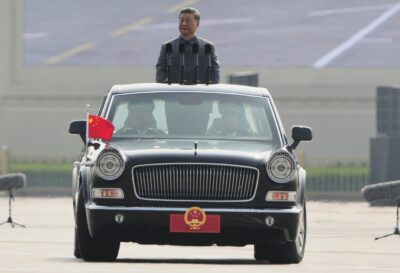
OTTAWA — Prime Minister Mark Carney is in Beijing this week for meetings with President Xi Jinping and other officials. Upon arriving in China Wednesday, Carney said he was “ready to build a new partnership” with the country.
While Canadians will be watching for signs that China plans to ease its tariffs on Canadian agriculture products, that’s not the only thing on the prime minister’s plate.
Here are four other themes Carney is likely to raise during his visit — and one that might be muted.
Climate change
Last September, Carney said China is “very sincere and engaged” on climate change. Describing China as a “country run by engineers,” he said Canada has “almost a standing offer” from Beijing to partner on fighting climate change.
In 2022 — when bilateral ties were still under heavy strain — the two nations co-hosted a major United Nations biodiversity summit in Montreal, as the intended host city of Kunming was still under COVID-19 restrictions. The summit was widely seen a success, in part because of productive collaboration between the two hosts.
Carney served as a UN envoy on “climate action and finance” from 2019 until last year and has spoken frequently about ways to fund the transition to greener economies and climate resilience. Since taking office, however, he has been criticized by environmentalists for his focus on boosting fossil fuel exports.
Carney said last month there are still “guardrails” on sectors where he does not want to engage more deeply with Beijing.
“There are areas — artificial intelligence, critical minerals, defence — where clearly the security threats are such that we would not have a deep relationship with China in those areas,” he told CBC, adding that he only sees collaboration on those themes with the European Union, London and — to a limited extent — Washington.
Consular access
Carney likely will raise the cases of Canadians detained in China and the ways in which Beijing could be falling short of a 1999 agreement governing consular access, which requires that partner countries notify other countries of arrests of their citizens and allow frequent consular visits.
Huseyin Celil, a Canadian and Uyghur human rights activist originally from China, has been imprisoned there since 2006. Chinese authorities have released little information about his condition.
In 2019, China sentenced B.C. native Robert Schellenberg to death on drug smuggling charges. Ottawa has called his sentence arbitrary and is pushing for clemency.
In early 2025, China executed four Canadians — all dual citizens — on drug charges.
Canada, meanwhile, has been spearheading a global initiative to fight against arbitrary detention in state-to-state relations — referred to by some as “hostage diplomacy.” It’s a response to China’s 2018 detainment of two Canadians in retaliation for Canada’s arrest of a Chinese telecom executive at the request of the U.S.
A multipolar world
Canada and China both feel the UN does not adequately reflect the needs of all of the world’s population and argue developing nations are left out of major decision-making bodies. But both countries disagree deeply on how global institutions should change.
Ottawa — limited in its influence over international laws and norms — has pushed for the preservation of the rules-based order to curb the actions of superpowers while urging reform to make those rules more effective.
China, on the other hand, wants fewer international investigations of its internal human rights issues and a bigger footprint in the South China Sea — one that infringes on areas international bodies say belong to countries like Vietnam and the Philippines.
Beijing has been stepping up its funding of and involvement in UN initiatives for years. Its influence has soared since Donald Trump returned to the White House a year ago and cancelled a lot of American international aid spending. China has said it will always be a developing nation and can reflect the concerns of African and South American nations far better than countries that held colonies on those continents.
Despite these differences, Xi and Carney could discuss their visions for more effective international collaboration.
Last November, in an opinion piece in The Economist, Carney argued gridlock at the UN and the World Trade Organization mean it’s time for informal, “purpose-built alliances” on specific themes that can cut through bureaucracy while working around issues where states disagree.
“Countries that might not normally be considered ‘like-minded’ will increasingly co-operate where they share specific goals and values on specific issues,” he wrote.
“For example, the new climate architecture could be an amalgam of trade rules anchored by the EU, technology standards centred in China and India, and nature-based solutions grounded in Brazil.”
Foreign interference
Last January, a federal inquiry concluded “China is the most active perpetrator of foreign interference targeting Canada’s democratic institutions” at all levels.
Beijing insists it does not interfere in other countries’ affairs, despite the accounts of diaspora and human-rights groups. China has also urged Canada not to interfere in matters it deems to be domestic, such as the status of Taiwan.
In April, Carney described Beijing as “the biggest security threat” facing Canada, citing Chinese political interference activities and its activity in the Arctic.
Carney has said that he raised the issue of foreign interference with Xi when he met with him last October and that Beijing does not understand how seriously Canada takes the issue.
Lynette Ong, a professor of Chinese politics at the University of Toronto’s Munk School of Global Affairs, said Beijing likely will continue to target Chinese-Canadians through political interference and transnational repression — regardless of how much trade takes place between the two countries — “because of the sheer size of Chinese diaspora in this country.”
“We have to think about separate measures to insulate ourselves from those harms,” she added.
Human rights?
Carney has been careful so far not to raise issues publicly that might irritate countries where he’s seeking investment.
During last November’s visit to the United Arab Emirates, the local hosts restricted media access to almost all events. Carney made only a passing reference to Sudan’s civil war when asked about widespread allegations that the UAE had been fuelling the conflict. He said he had discussed the war in general terms with his counterparts.
Carney is unlikely to raise concerns publicly about China’s collaboration with investigations into the origins of the COVID-19 pandemic, or the UN’s finding in 2022 that China is responsible for “serious human rights violations” against its Uyghur minority which may include “crimes against humanity.”
Canada has joined its allies in pushing back against acts of repression in Hong Kong — such as the recent conviction of publisher Jimmy Lai — and the sale of Chinese-made drones to Russia for use against Ukrainian civilians.
China might also push back on Canada’s attempt to weed out products linked to forced labour through legislation that the opposition has argued is not well enforced. The federal government has left the post of ombudsman for corporate ethics vacant since spring 2024, after the office reported major multinationals may have used cotton linked to slave labour in Xinjiang.
Human Rights Watch has urged Carney to “make human rights a key focus of his visit,” arguing that “the Chinese government’s deepening repression threatens not just the rights of people in China but, increasingly, Canada’s core interests and values.”
This report by The Canadian Press was first published Jan. 14, 2026.
Dylan Robertson, The Canadian Press
-42



Carney doesn’t care about those 5 points ,actually. Check out his business portfolio history. He is all about enriching himself.