


Carney visiting Qatar to drum up investment despite ‘brutal’ human rights record
By Canadian Press on January 17, 2026.
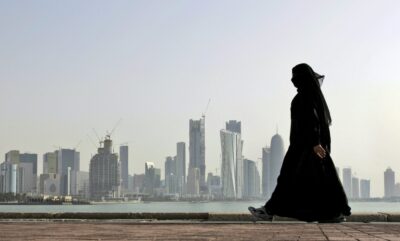
OTTAWA — Prime Minister Mark Carney is heading to Qatar to drum up investment deals with a country known for both its brutal dictatorship and its growing diplomatic and economic influence.
“Today, the epicentre of diplomatic, economic, financial and commercial power in the Middle East is in the Gulf,” said University of Ottawa professor Thomas Juneau, an expert on the Persian Gulf.
“For Canada to neglect the region, as it did for the past 10 years, is a way to erase ourselves from the equation in the Middle East.”
Carney’s travel plans had him arriving in Doha late Saturday from Beijing, though the possibility of American military action against nearby Iran could change his plans.
On Sunday, Carney is set to take part in a reception at the bureaucratic headquarters of Qatar, the Amiri Diwan. He will then meet with Emir of Qatar, Sheikh Tamim bin Hamad Al Thani, along with the country’s prime minister and its deputy prime minister.
All three officials are sheiks who are part of the House of Thani, which has ruled Qatar since 1868 and has the final say over government decisions. Qatar’s consultative assembly — its legislature — has very limited governing powers.
Carney will then meet with the Qatar Investment Authority before visiting a cultural institution and attending an official dinner.
Carney’s office said he will be seeking more trade access and partnerships in artificial intelligence, infrastructure, energy and defence while in Qatar.
Qatar’s natural gas wealth has bankrolled its state investments abroad, including rising investments in Canadian holdings.
The visit comes after Carney landed a large investment deal during a trip to the United Arab Emirates last November, where Abu Dhabi officials restricted media access to almost all his events.
Qatar is an American ally that has taken on increasing diplomatic importance. It hosted negotiations between Israel and Hamas and assisted Canada’s work to bring Ukrainian children abducted by Russia back to their families.
The country has attempted to take part in talks between Rwanda and the Democratic Republic of Congo, and between the Venezuelan regime and Washington. Qatar has hosted the Taliban delegation since the group took over Afghanistan in 2021, and Canada has had limited engagement with its officials on human rights issues.
“Qatar has decided that it would play the role of a mediator, of a facilitator of conflict resolution, and that to do that, it needed to be able to talk to everyone,” Juneau said.
Last spring, U.S. President Donald Trump accepted Qatar’s gift of a jet and last September he made Israeli Prime Minister Benjamin Netanyahu apologize for an airstrike on the Hamas compound in Doha earlier that month.
Qatar hosts many injured Palestinian children from Gaza, and Juneau said it is among the countries hoping Canada’s existing programs aimed at training Palestinian security forces in the West Bank can help build up Gaza if the current ceasefire proceeds to a full peace.
He also said Qatar could partner with Canada to fund humanitarian and development work, since Ottawa brings an expertise on effective projects in multiple regions across the world.
Human Rights Watch still raises numerous concerns about Qatar, citing slave labour resulting in migrant work deaths, restrictions on free expression and increasing surveillance.
The country chafed against widespread criticism of its treatment of migrant workers and its human rights record in the lead-up to its 2022 hosting of the FIFA World Cup.
During that event, Qatar’s officials barred the entry of articles of clothing with rainbows — including items with no LGBTQ+ themes.
UN Women says Qatar has no domestic violence legislation and abortion is illegal there — including for rape victims — unless the woman’s life is at risk. Women in Qatar require permission from a male guardian to travel abroad or work in certain jobs.
Juneau said Canada has no real influence over these matters and speaking out publicly would have a limited effect. Carney might still raise these issues behind closed doors, he said.
“It’s a brutal dictatorship, and that is not going to change,” Juneau said. “Human rights in Qatar are atrocious and nobody should realistically deny that.”
Juneau said it’s up to Canadians and their governments to decide whether they want to limit relations with the Gulf countries on human rights grounds, or deepen these ties to make up for the economic uncertainty caused by Trump’s global trade war.
“By making the decision not to be there, we are really wasting not only commercial but also diplomatic opportunities,” he said.
This report by The Canadian Press was first published Jan. 17, 2026.
Dylan Robertson, The Canadian Press
-28