


A girls’ soccer tournament drives HPV vaccine awareness in Zimbabwe
By Canadian Press on January 25, 2026.
NORTON, Zimbabwe (AP) — Lesotho’s Lishoeshoe soccer club was losing by four goals at halftime against South Africa’s Mamelodi Sundowns in the final of a regional Under-17 girls’ tournament in Zimbabwe aimed at promoting cervical cancer vaccination. By fulltime, the gap had stretched to 5-0.
Yet for Lishoeshoe winger Nteboheleng Leticia Sooane, the result felt beside the point.
For the 16-year-old, the tournament’s most important outcome had little to do with goalmouth scrambles or final-whistle disappointment. Instead, it was about building confidence among girls to trust the HPV vaccine and prevent a disease that kills a woman every two minutes globally — with the burden most acute in Africa, according to GAVI, the Vaccine Alliance, one of the tournament’s organizers.
“Participating in the tournament was very good because we had to learn and spread (the message) even though we did not win the finals. So it was a good experience,” Sooane said as she waited to collect her finalist’s medal in a rain-soaked stadium in Norton, on the outskirts of Zimbabwe’s capital, Harare.
Sooane was among about 200 girls from six countries taking part in the CAF Under-17 girls’ tournament in December, organized by Africa’s soccer governing body CAF together with the European soccer body, GAVI and health ministries from several African countries.
Dubbed the Goal Getters campaign, the initiative was first showcased in Tanzania and Eswatini earlier last year before moving to Zimbabwe in December, using soccer to build awareness and trust in the HPV vaccine.
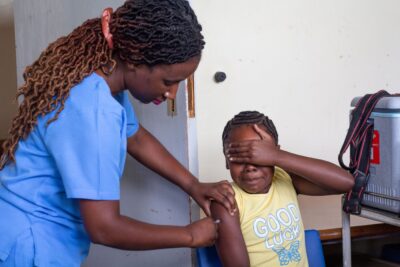
Offered for free, the HPV vaccine being administered to girls aged between 9 and 14 years can prevent up to 90% of cervical cancer cases, saving families thousands of dollars in treatment costs later in life if girls are not vaccinated, according to GAVI.
Campaign blends sport and health
After setbacks caused by COVID-19 lockdowns and uneven national immunization programs, Africa has intensified HPV vaccination drives in recent years. Coverage for at least one dose of the HPV vaccine rose to 40% in 2023 from 28% the previous year, behind only behind North, Central and South America, driven by expanded campaigns backed by governments and GAVI, according to the World Health Organization.
The girls’ soccer tournament is a key part of that effort, said GAVI spokesman Olly Cann.
“One of the great aspects of the Goal Getters campaign is that it enables us to blend two things that teenage girls are passionate about, one is sport and the other is health,” said Cann. “It creates a really safe space where the girls can feel trusted, they can feel secure, they also feel empowered.”
The campaign’s launch mixed dance and song before the eight-team tournament kicked off. On the sidelines, mothers streamed to a nearby clinic, some drawn by the chance to see well-known women’s soccer figures, while also getting their children vaccinated against HPV.
HPV, or human papillomavirus, is a common sexually transmitted virus and the primary cause of cervical cancer. While most infections clear naturally, some persist and can lead to cancer years later.
Cervical cancer is the fourth most common cancer among women worldwide, killing about 350,000 women each year, according to the WHO. Africa accounts for nearly a quarter of global deaths, and 19 of the 20 most affected countries are in sub-Saharan Africa, Cann said.
Zimbabwe is among the five countries with the highest burden on the continent. Cervical cancer is the most common cancer among women in the country of 15 million people and kills about 2,000 women annually, according to the national cancer registry.
Ahead of the girls’ tournament, Zimbabwe introduced a single-dose HPV vaccine, a shift authorities hope will boost uptake following the two-dose regime rolled out nationally in 2018.
‘There are many misconceptions’
Misinformation and stigma around reproductive health remain major obstacles. On a recent weekend in January, just two 10-year-old girls turned up for vaccination at Budiriro Polyclinic in one of Harare’s densely populated townships — a pattern health officials say is common, forcing most HPV vaccinations to be delivered through schools instead.
“Many families are not bringing their children to the clinic to be vaccinated,” said Barbara Mashonga, the nurse in charge of community mobilization at the clinic. “Even when we follow up at schools, some refuse. The biggest challenge is religious beliefs.”
“Some parents think the injections are a secret family planning method that will prevent their children from having babies,” she said. “There are many misconceptions, which is why health education is a major part of the campaign.”
Officials say soccer-based initiatives can help bridge that gap.
“We are embracing these opportunities so our communities can become better because of soccer,” said Nqobile Magwizi, president of Zimbabwe’s soccer association, as celebrations erupted for tournament winners Mamelodi Sundowns.
For Sooane, the message went beyond the final score.
“Cancer is a big disease, so every child should get the vaccine so they can be protected,” she said. “So all of us came here to learn about it so we can keep our health intact.”
___
For more on Africa and development: https://apnews.com/hub/africa-pulse
The Associated Press receives financial support for global health and development coverage in Africa from the Gates Foundation. The AP is solely responsible for all content. Find AP’s standards for working with philanthropies, a list of supporters and funded coverage areas at AP.org.
Farai Mutsaka, The Associated Press
-30