


Justice minister rejects Alberta call for more input in federal judicial appointments
By Canadian Press on February 4, 2026.
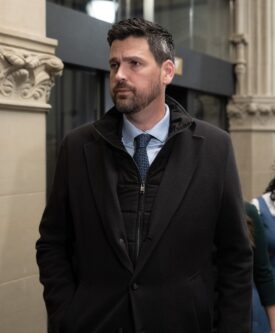
Federal Justice Minister Sean Fraser says he won’t act on Alberta Premier Danielle Smith’s call for more input on the selection of judges after she said she would withhold court funding if such changes aren’t made.
“I’m planning to maintain the process that we have in place that has independence, that has rigour, that has led to stellar candidates being appointed, including recently in Alberta,” Fraser told reporters Wednesday.
“With respect to the process that we’ve established, it’s working very well.”
Smith, in a letter to Prime Minister Mark Carney her office made public Tuesday, said she wants her province to be consulted on future appointments to Alberta’s Court of King’s Bench, the Alberta Court of Appeal and the Supreme Court of Canada.
If such changes aren’t coming, Smith said her government would hold back money those judges need to do their jobs.
The federal government appoints and pays the judges serving on superior courts in Alberta, but the province pays for support staff, including judicial assistants, legal counsel, sheriffs and court clerks, as well as furniture, cellphones and computers.
Fraser said the current process for deciding appointments works well and includes independent advisory committees that factor in feedback from provinces.
“My sense is we have a functioning independent process. We should protect it and defend the independence of the judiciary.”
He added it’s essential for judges to make decisions without fear and without seeking the favour of those who have power over appointments. Protecting that independence involves ensuring there are no “political threats about the resources that are going to be made available,” he said.
Fraser pointed to other countries, which he did not name, that have “showcased nowhere is safe from democratic backsliding, and if we’re going to have a functioning democracy, an independent judiciary is a key part of it.”
Smith, in her Jan. 23 letter, says closer collaboration would help ensure the appointments “appropriately reflect Alberta’s distinct legal traditions,” and strengthen public confidence in the administration of justice.
Smith’s office declined to specify what she meant by Alberta’s “distinct legal traditions.”
Sam Blackett, spokesman for the premier, said Wednesday in a statement that while Smith waits for a reply from Carney, they hope Fraser reconsiders his stance.
When it comes to the Supreme Court, an independent advisory board of eight, including two members appointed by Quebec and two appointed by the federal government, makes recommendations for those appointments to the prime minister.
Blackett said the current federal judicial advisory committee for Alberta’s superior courts only includes one Alberta government nominee and three nominees from the federal government.
“That is why Alberta’s government wants to work together with the federal government to identify highly qualified candidates through the establishment of a special advisory committee with equal membership from the Alberta and federal government,” he said.
However, the website of Office of the Commissioner for Federal Judicial Affairs Canada also lists nominees from the Law Society of Alberta, the Alberta chief justice and Canadian Bar Association as part of the committee.
Jared Wesley, a political scientist at the University of Alberta, said it’s worrying that Smith is threatening to impair access to the justice system — which is already strained — to gain more influence over a process her government already has input on.
He expressed concern that cases will be thrown out if they are delayed, which will result in people who would otherwise be eligible for conviction being turned out on the street.
“That’s the least conservative approach to law and order that I’ve heard of,” Wesley said in an interview Wednesday.
Smith has, in recent months, been critical of what she calls “activist” courts and “unelected” judges. She recently said she wished she could “direct” judges in regards to bail rules and decisions.
In the fall sitting of the legislature, her government invoked the Charter’s notwithstanding clause four times to shield its laws from court challenges, with the premier saying she believes in parliamentary supremacy.
Alberta’s three chief justices, in a rare public statement last week, urged respect for the independence of the judicial branch, saying democracy only functions when all three branches of government operate independently.
Wesley said Smith’s letter to Carney on judicial appointments appears to be part of a pattern of attacking judicial independence, and removing democratic checks and balances.
“We’re rapidly shifting out of the realm of liberal democracy and pluralism and towards something else. And I don’t think Albertans quite appreciate how quickly that can happen,” he said.
On Tuesday, Shawn King, president of the Criminal Trial Lawyers Association, which speaks for defence lawyers across Alberta, warned if Smith follows through on her ultimatum, the already-stressed justice system will “implode.”
He said it could mean more delayed cases or even lead to the dismissal of criminal charges. “This is potentially catastrophic,” he said.
Smith is also calling on Carney to relax bilingualism requirements for federal appointees, saying imposing bilingualism on Supreme Court judges further entrenches both barriers and Western alienation.
This report by The Canadian Press was first published Feb. 4, 2026.
Lisa Johnson and Anja Karadeglija, The Canadian Press
33-32