


‘Horrible war’: Ukrainian eye doctor training in Calgary to better help wounded
By Canadian Press on February 24, 2026.
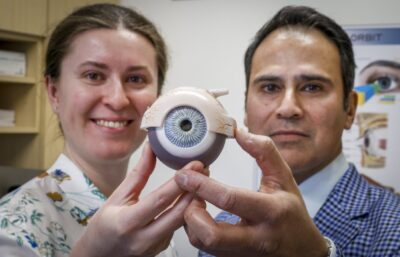
CALGARY — Dr. Pavla Ivaniuta remembers the first days of the Russian invasion of Ukraine and the stream of wounded men, women and children she treated for horrific eye injuries.
The most common wounds — from explosions — required parts of an eye or the entire eye to be removed, says Ivaniuta.
“It is due to this horrible war,” she said in a recent interview in Calgary.
“I used to cry every time … now I realized I can help.”
Four years after the war began, the 26-year-old said the best thing she can do to help is to improve her skills.
Ivaniuta is the first Ukrainian doctor to take part in a humanitarian fellowship at the University of Calgary’s Cumming School of Medicine. The program had earlier been set to bring another Ukrainian doctor to Calgary, but there was trouble with paperwork.
Four months into her six-month fellowship, Ivaniuta is learning how to save and rehabilitate eyes and eyelids.
The doctor, who grew up in Kyiv, said it’s important not only to treat physical trauma but to find other ways to help patients and their families.
“Usually it’s a young patient, usually young males with such trauma … you try to give some support and you try to give some kind words.”
Dr. Karim Punja, an orbit and oculofacial plastic surgeon and clinical associate professor at the Calgary medical school, has been teaching Ivaniuta.
“My goal is to try and impart as much knowledge as I can that is practical, relevant knowledge that they can use now on the front lines as well as for the decades that come,” he said.
Ukraine needs more eye specialists, he said.
“It’s a state of crisis where they have to deal with regular diseases like we do in Canada, but with an insurmountable amount of trauma and injury that would be soul crushing to deal with that kind of a workload,” Punja said.
After Ivaniuta returns to Ukraine, Punja is scheduled to join her and continue teaching there for two weeks while she performs surgeries.
There’s then some remote learning and she is to travel back to Calgary to finish her training.
Punja said as part of the fellowship, Ivaniuta had to agree to go back to work in Ukraine and pass on the knowledge.
Ivaniuta said Ukraine’s medical community is very competitive and it’s hard to get doctors to teach.
“I really want to change it.”
This report by The Canadian Press was first published Feb. 24, 2026.
Bill Graveland, The Canadian Press
-22