


Students stranded after Tribe terminates bus agreement
By Lethbridge Herald on March 4, 2026.
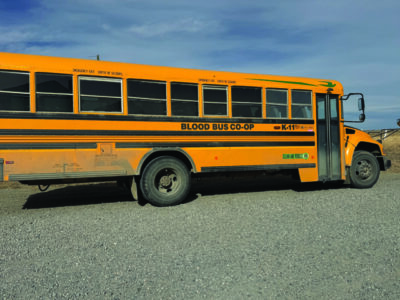 Herald Photo by Alexandra Noad Blood Tribe Bus Co-op suspended services beginning Tuesday after receiving a letter of termination from the Administration of the Student Transportation Services from Blood Tribe Chief and Council on Monday.
By Alexandra Noad
Local Journalism Initiative Reporter-Lethbridge Herald
Over 1,200 students from the Blood Reserve are missing school after the Blood Tribe Chief and Council, Finance committee and Senior management unexpectedly terminated the Administration of Student Transportation Services Agreement with the Blood Reserve Bus Co-op on March 2.
This agreement provided $6.1 million dollars in funding, from Indigenous Services Canada (ISC) to operate one of the largest First Nation student transportations in Canada and covers costs for drivers wages along with fuel, insurance, maintenance, compliance to regulations and the daily operation of the fleet.
Trina Heavy Shields, manager for the Blood Reserve Bus Co-op explains the Blood Tribe plans to pay the bus drivers, but without the administration work none of the essential things such as insurance, gas, loans on the bus and other fees are taken off of their paycheques.
“So (those costs) are deducted and then those payments come (to us from the vendors) and we do all the payments.”
The termination letter given the Bus Co-op, says the reason for the termination is due to the lack of financial records, but Heavy Shields states they have been on top of their financial records, which are sent to the Blood tribe every month.
“I have all of my finance records in place…and our stuff gets sent to our regular board meeting and they’re signed off by our president and treasurer once they’re reviewed.”
She adds that they have also come out with a clean audit every year, but the Tribe is claiming they don’t have those records.
“They’re making us look like we did some mismanaging, but I have all my financial records…we’re up to date on everything and we have a paper trail on when we send them over.”
Heavy Shields also says they were under the impression they were in negations with IRC to increase funding due to rising costs.
She adds that there wasn’t even proof of a Band Council Resolution, which is signed by all members of Chief and Council. Heavy Shields also requested the meeting minutes and was denied.
Members of the co-op drive up to 300 km per day, often in poor road conditions. They also have to manage 25-30 students on the bus often seeing first-hand how rough homelife is for the children.
Heavy Shields says the drivers have to go through training to report when they see child abuse, so CPS can be notified, but even with the training, dealing with the kids is not an easy task.
“It’s hard for them because they see where (the children) are coming from and then they have this behavior once they get on and a lot of our buses need ride along monitors because of the behaviours.”
The Co-op also doesn’t force children to attend schools on reserves because of the history of residential schools and the impact it had on the children’s parents and grandparents.
Heavy Shields says the Co-op has felt undermined by senior management for a long time pointing out they had to do their own fundraising to purchase cameras and GPS systems for the bus, which allow the administration track the bus at any time in case of an emergency like getting stuck.
The Blood Tribe is building three state-of-the-art buildings costing millions of dollars, while they cut funding to the Co-op by $500,000 due to the Tribe covering the administration roles of the Co-op.
“Leaders, where are your priorities?” asks Heavy Shields. “We need to look after our kids and its really sad that they’re playing with our kid’s life like that.”
Many of these children missing school rely on the services provided at the schools including meals. Many of the parents of the children say they are unable to get their children to school due to limited gas funds, not having a vehicle or having to get to work themselves, all reasons why the children need the bus service.
The Co-op did a small demonstration yesterday morning, with members driving through the streets of Standoff, but it was also a day of prayer, asking Chief and Council for a responsible resolution.
They are prepared to resume student transportation services immediately upon written confirmation the funding will be restored in accordance with the Agreement.
The Herald reached out to the Blood Tribe and didn’t receive a response before deadline.
ISC was also contacted, and could not provide a statement for the deadline, but said they would respond as soon as possible.
25-24