


Polytech wellness experts encourage “fitness snacks” to help with a healthier workday
By Lethbridge Herald on March 13, 2026.
 Herald photo by JOE MANIO
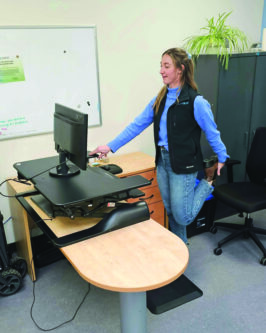
Caylee Vogel, program administrator at Lethbridge PolytechnicÕs Be Fit for Life Centre, demonstrates a quick desk stretch that helps relieve tension on Thursday.
Herald photo by JOE MANIO
Caylee Vogel, program administrator at Lethbridge PolytechnicÕs Be Fit for Life Centre, demonstrates a quick desk stretch that helps relieve tension on Thursday.By Joe Manio
Lethbridge Herald
Experts at Lethbridge Polytechnic say the solution doesn’t require a gym membership or major lifestyle change. Often, small and consistent movement breaks are enough to reduce stiffness, improve circulation and boost energy.
“Lots of people in different work environments are sitting a lot during the day, especially on the computer,” says Diane Gallagher, project co-ordinator with the Be Fit for Life Centre. “Common issues we see are tight necks, upper backs and shoulders, headaches and posture problems that develop simply from sitting too long.”
Research shows Canadians working full time are sedentary for nearly 70 per cent of their day. While the immediate effects may appear as soreness or fatigue, prolonged inactivity can also affect circulation, cardiovascular health and overall wellness.
“Being sedentary isn’t just uncomfortable… it can have broader impacts on health,” Gallagher says.
A sedentary workstyle typically means spending four to six hours a day seated with minimal movement. While some assume it’s a problem that comes with age, Gallagher says younger people are increasingly experiencing the same issues.
Working on a post-secondary campus, she sees the trend regularly among students.
“We see students sitting hunched over laptops all day,” she says. “It’s remarkable how much posture has changed. That rounded posture is becoming really common, and you don’t have to be an adult to experience those effects.”
The good news is that small habits can make a noticeable difference.
One of the most effective strategies is simply breaking up long stretches of sitting. Gallagher recommends standing up and moving around at least once every hour.
“Even a short walk around your workspace or some light stretching can help,” she says. “You’re moving your body in ways you weren’t while sitting and improving mobility in joints that have been stuck in one position.”
Switching positions also helps. Standing desks can be useful… but only when they’re used dynamically.
“Standing all day can be hard on your body too,” Gallagher says. “The key is variety. Sit for a while, stand for a while… then move.”
Caylee Vogel, program administrator at the Be Fit for Life Centre, encourages workers to think of these quick bursts of activity as “fitness snacks.”
“Your activity doesn’t have to happen all at once,” Vogel says. “You can spread it throughout the day. Even a quick walk during a break helps increase blood flow, wake up your brain and boost your energy.”
Instead of reaching for another afternoon coffee, Vogel suggests taking a short walk, climbing a flight of stairs or doing simple stretches.
“Those small breaks can help you feel more focused and refreshed for the rest of the workday,” she says.
Workplaces themselves can also support healthier habits. Vogel suggests shorter meetings, walking discussions or scheduling brief breaks between appointments.
“If meetings start five or 10 minutes later in the hour, that small gap gives people time to move,” she says. “Even brainstorming meetings can be done while walking.”
Hydration is another often overlooked piece of workplace wellness.
Vogel recommends keeping a water bottle nearby and sipping throughout the day… not only to stay hydrated but also to encourage movement.
“If you’re drinking enough water, chances are you’ll be getting up regularly,” she says.
Breathing habits can also help counter workplace stress. Gallagher suggests pairing deep breathing with routine tasks.
“For example, every time you send or open an email, take a deep breath in and a slow exhale,” she says. “It relaxes your shoulders and helps reset your focus.”
Outside the office, strengthening the upper body and improving mobility can further support posture and reduce stiffness.
Ultimately, both experts say the goal isn’t perfection… it’s consistency.
“Our bodies are made to move,” Gallagher says. “It doesn’t have to be one long workout. Little bits of movement throughout the day really do add up.”
And sometimes the simplest advice is the most effective.
“Get up, stretch, walk and breathe,” Vogel says. “Those small choices can make a big difference in how you feel by the end of the day.”
31-30