

How Canadian film ‘Undertone’ became a box-office hit despite public funding rejection
By Canadian Press on March 17, 2026.
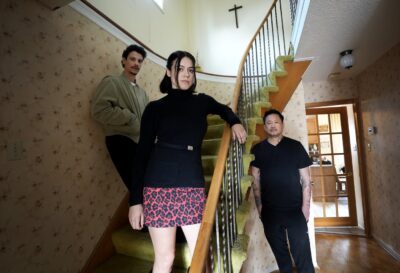
TORONTO — Personal grief, a potentially haunted house and a sound-driven sense of dread helped turn “Undertone” into one of the year’s most unexpected horror hits.
But the biggest twist? The director says Canada’s public film funders passed on it.
The Toronto-shot film opened to $9.3 million at the North American box office over the weekend — a scary good debut for a movie made on a $500,000 budget.
For director Ian Tuason, his debut feature’s unlikely path to the big screen is also a quiet critique of how Canadian films get financed.
“You have juries deciding who gets the money, but are they making the correct decision?” asked the Filipino-Canadian filmmaker in an interview last week.
“How many people are watching these movies now? What’s the demand for these types of movies? If the numbers are low, then we should flip it. We should figure out a different way to allocate the money.”
“Undertone” stars “The Handmaid’s Tale” actress Nina Kiri as a woman who returns home to care for her sick mother, only to be haunted by disturbing audio clips sent by her paranormal-podcast co-host, played by “White Lotus” star Adam DiMarco.
Frustrated with Canada’s funding system, Tuason teamed up with Toronto producers Dan Slater and Cody Calahan and L.A.-based financier Kino Studios to scrape together enough money to begin filming with a small crew in February last year.
After the film’s world premiere at Montreal’s Fantasia International Film Festival, A24 won a distributor bidding war to secure global rights.
Tuason wrote “Undertone” during the pandemic while caring for his parents, both suffering from cancer, in his family home in Rexdale, a west-end Toronto suburb — the same house where much of the movie was shot. Budget constraints were the “number 1” reason they filmed there.
“I was caregiving my mom and dad here in this house, and I was writing ‘Undertone’ here in the house,” he said. “I was drawing from my personal fears and putting it into the script.”
Both of his parents died during that period, shaping the film’s tone and his approach.
“I reached a point where I made a commitment to radical honesty,” said Tuason said, who began his career making 360-degree virtual reality horror shorts on YouTube.
“I saw my life start changing after that. And then it affected how people were honest with me. It affected my art.”
That honesty carried over into the film, which follows Kiri’s character Evy as grief, isolation and unsettling recordings send her into a nightmarish psychological spiral.
On set, the story’s personal nature created an unusually collaborative atmosphere.
“I think because he was so honest with all of us, everybody came in wanting to do the best job possible,” Kiri said.
At the time, she said, no one involved expected the film to become a breakout hit.
“We were all just like, ‘Oh, we’re making a micro-budget horror movie.’ There was no other reason than to do justice to a story everybody cared about.”
The production leaned into its limitations. The entire story unfolds inside the house, with Kiri’s character often alone, headphones on. The film’s eerie sound design is unnerving, from faint whispers to children’s songs played backwards.
“She’s in a loop of guilt and denial,” Kiri said. “That’s what it feels like when you are alone.”
Adding to the creepy atmosphere, Tuason said strange things sometimes happened during filming. Lights repeatedly flickered during camera tests — just as they do in the script.
“Once it was like day five of it flickering, we were all like, ‘OK, we all believe now,’” Kiri laughed.
“No one talks about how the house is another character in the film,” DiMarco added. “Maybe the lights flickering is the house auditioning, being like, ‘Look, I have range too!’”
Tuason, however, prefers not to frame these moments as sinister: “Paranormal doesn’t mean bad. It just means above normal.”
He said he’s heard from many filmmakers who’ve said “Undertone” inspired them “to self-finance and to just do it.”
Private investors, he added, made the film possible: “It was my money, and then other people’s money who read the screenplay and said, ‘This is good — here’s some money.’”
“That’s the problem with public funding,” he said. “No one in that jury is risking their own money. As soon as you start risking your own money, you’re going to make something good.”
Telefilm funding decisions are generally made through internal evaluations, with some programs using internal or external advisory committees or peer juries.
DiMarco suggested jobs in Canada’s public film funding system should be “performance-based.”
“If they pick too many flops, they’re gone off the jury. Three strikes, you’re out. You’ve got to be picking winners,” he said.
Tuason is now focused on his next project: a reboot of the “Paranormal Activity” franchise, which he agreed to helm only if he could work with the same Canadian crew from “Undertone” — and shoot in Toronto.
“We’re going to make a Canadian version of an American film.”
Even as he prepares for big-budget thrills, Tuason wants to help spark opportunities for others. He said he hopes his success inspires Telefilm to take more chances on first-time filmmakers.
“If not, I’ll allocate some of the ‘Paranormal’ money to them,” he said.
“I’ll give a million dollars to a kid, just for his pitch.”
This report by The Canadian Press was first published March 17, 2026.
Alex Nino Gheciu, The Canadian Press
-40