

Council of Women’s Shelters report highlights transportation barriers
By Lethbridge Herald on March 19, 2026.
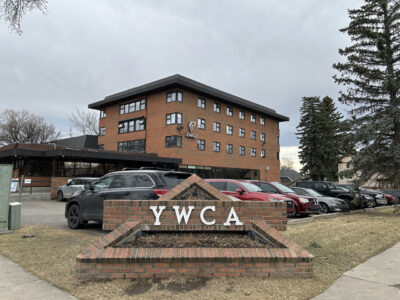 By Alejandra Pulido-Guzman A report by the Alberta Council of Women's Shelters shows that lack of transportation access is the first barrier to safety for many survivors of gender-based violence in rural Alberta, as the YWCA is the regional hub for some of those individuals, the barriers are felt within the city as well.
By Alejandra Pulido-Guzman
Lethbridge Herald
The Alberta Council of Women’s Shelters (ACWS) released a report that shows how transportation is the first barrier to safety for many survivors of gender-based violence in rural Alberta.
Titled “A Ride Can Save a Life: Transporting Survivors in Rural Alberta to Safety and Healing,” the report showcases how limited public transportation in and between rural communities can create dangerous situations for those trying to find safety.
It also outlines how public transportation within and between rural communities can be unreliable, prohibitively expensive, or simply unavailable.
ACWS Executive Director, Cat Champagne says transportation is not as talked about as other barriers for survivors, but it is one of the most common reasons that survivors struggle to escape abuse.
“If they don’t have access to transportation, some survivors are forced to stay in the situations they are in,” says Champagne.
She explains that they generated the report from a Rural Transportation Project, where the ACWS distributed transportation funding to shelters across rural Alberta over a 14-month period.
“We received some funding from the Ministry of Children and Family Services to provide additional support for transportation. Over that period of time, we gave out $113,000 to some of our member shelters,” says Champagne.
The project helped support 3,430 survivors, including 2,087 adults and 1,343 children with transportation to safety and essential services.
“There is no ride sharing services in a lot of those communities, there isn’t public transit, some of them don’t even have taxis in them,” says Champagne.
But that doesn’t stop there, the ACWS shares that even after reaching safety, survivors still need reliable transportation options to help them get to work, attend appointments, and take their children to school.
YWCA Executive Director, Jill Young says transportation barriers are also experienced by those fleeing gender-based violence within the city and those trying to arrive here for safety.
“Although the report focuses on rural access, we are a regional hub for those individuals and it’s really important to understand,” says Young.
She says that without access to transportation, whether that is public transportation, client led through vehicles or buses, or any form of transportation, it makes it very difficult for an individual to navigate through their journey.
“If an individual can’t get to a shelter, or get access to resources like healthcare, court dates, and different supports that are needed, it can make a difference between safety or… potentially death,” says Young.
She adds that they also see movement between shelters, intentionally, so that there is access to different resources, and because other shelters may have different capacity levels.
“We have seen individuals come from Grand Prairie because we have space. And so those are important pieces when an individual needs shelter,” says Young. “When they need those resources, if they don’t have a way to get here, they’re not going to be able to find that safety.”
Champagne says the report also calls for investment in public transportation, flexible funding for shelters to spend on transportation solutions, and gender-based violence training for employees of ride-hailing services.
The ACWS makes some policy recommendations based on the report:
- Invest in affordable public transportation in rural Alberta.
- Provide long-term, flexible transportation funding for shelters.
- Introduce subsidized taxi token systems for survivors.
- Require gender-based violence training for taxi employees.
“People can help by advocating for accessible public transportation, volunteering as a shelter driver, participating in gender-based violence awareness training, by donating to their local shelter, and by supporting businesses that partner with shelters to transport survivors,” says Champagne.
22-21