


Spring has sprung… on paper, anyway
By Lethbridge Herald on March 20, 2026.
 Screenshot
By Joe Manio
Lethbridge Herald
If spring were a person in southern Alberta, it would be the kind who shows up early… then leaves, comes back, and changes outfits three times before settling in. By the calendar, the first official day of spring occurs exactly at 8:46 a.m. on Friday, March 20.
That’s because while the vernal equinox (landing on or around March 20 annually) marks the official first day of spring, the weather outside your window may have missed the memo. Sunshine and snow can trade places in a matter of hours and it’s not unusual to wake up to frost well into May.
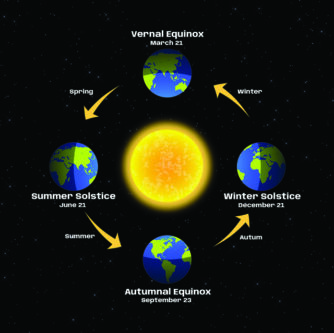
Still, the equinox is more than just a date on the calendar. It’s rooted in astronomy and it tells us something important about how our planet moves through space.
The word “equinox” comes from Latin meaning “equal night.” On this day, the Earth’s axis is tilted neither toward nor away from the sun, resulting in nearly equal hours of daylight and darkness across the globe. It’s one of only two times a year this happens, the other being in the fall.
From this point forward the Northern Hemisphere begins to tilt increasingly toward the sun. Days grow longer, sunlight becomes more direct, and temperatures gradually rise. In other words…the ingredients for spring are officially in place.
But if that’s the science, why doesn’t it always feel like spring in places like Lethbridge?
The answer lies in the difference between astronomical seasons and meteorological reality. While the equinox is tied to Earth’s position in orbit, weather is influenced by a much messier mix of factors… air masses, wind patterns, elevation and geography.
Southern Alberta in particular is known for its unpredictability. Chinook winds can sweep in and melt snow in hours, only to be followed by a blast of Arctic air that drops temperatures just as quickly. The result is a season that doesn’t so much “arrive” as it does… meander, like the rivers here..
For longtime residents this is all part of the rhythm. But for newcomers, the equinox can create false hope; an expectation that winter is firmly in the rearview mirror.
Not quite. After all, we live in a province that adheres to the saying: “If you don’t like the weather, wait five or ten minutes.”
Environment and Climate data shows that the risk of frost in southern Alberta can linger well into May often right up to the Victoria Day (May 18) long weekend. That means gardeners, in particular, need to exercise patience. Planting too early can lead to disappointment when a late cold snap rolls through.
Gardeners, take note…the Old Farmers Almanac (www.almanac.com) lists May 25 as the last spring frost date for this area; after which it is safe to plant.
Even so, subtle signs of spring do begin to emerge around the equinox—if you know where to look.
The sun sits higher in the sky. Snowbanks shrink at the edges. Birds return, and the light itself feels different—warmer, softer, more persistent. These changes may not always register on the thermometer, but they signal a seasonal shift that’s already underway.
Spring it turns out isn’t a switch that flips overnight. It’s a transition—a gradual unfolding shaped by both celestial mechanics and local quirks.
And that’s part of its charm.
Because in southern Alberta spring isn’t just about balmy afternoons and blooming flowers. It’s about resilience… about enduring one last snowfall, one more cold morning, before the season finally takes hold.
So while the vernal equinox marks the official first day of spring; around here it’s better understood as an opening act.
The real show? That takes its time but when it finally arrives (for good) it somehow feels all the more earned.
-3