


Feminists urge continuing fight of slain Iraqi-Canadian, Yanar Mohammed
By Canadian Press on March 28, 2026.
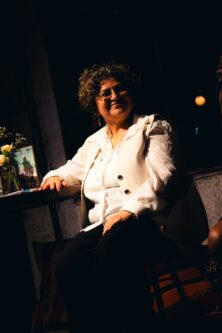
OTTAWA — Gender-equality activists say a Toronto woman who was killed this month after decades pushing for women’s rights in her native Iraq would not want Canadians to give up the fight for equality.
Toronto resident Yanar Mohammed opened the first women’s shelter in Iraq two decades ago. She died after being shot outside her home in Baghdad on March 2.
“Her moral clarity was profound,” said Jess Tomlin, co-founder of the Equality Fund, which is one of the main channels of delivering Canadian aid to groups on the ground advancing feminist causes abroad.
“She represented so much of what we hold to be most valuable in our society.”
Mohammed was born in Baghdad and later fled to Lebanon, after the 1991 Gulf War and punishing western sanctions on Iraq’s economy.
She worked in Beirut with her parents before moving to Canada in 1995 with her husband and young child. Mohammed secured refugee status and worked as an architect.
The 2003 American invasion of Iraq emboldened her, Tomlin said.
Mohammed fought against both the existing social and political restrictions on women in Iraq and the U.S. invasion that was fracturing society and leading to the rise of radical Islamist leaders.
“We used to have a government that was almost secular. It had one dictator,” Mohammed told feminist group Madre in 2006. “Now we have almost 60 dictators — Islamists who think of women as forces of evil. This is what is called the democratization of Iraq.”
She co-founded the Organization of Women’s Freedom in Iraq, which started the first women’s shelter and expanded to a network of safe houses for women fleeing violence and exploitation.
The network has responded to multiple forms of violence against women, housing girls fleeing honour killings and Yazidi women who survived sexual slavery by the Islamic State group, while providing counselling to survivors of rape and trafficking.
Mohammed ended up flying back and forth between Toronto and Baghdad for years, often leaving Canada every three months for weeks.
“She knew that she had a target on her back. But she was totally compelled by the mission in her life to do this work,” Tomlin said.
Tomlin recalls Mohammed briefing former prime minister Justin Trudeau a decade ago on how to advance a feminist foreign policy, alongside Liberian peace activist Leymah Gbowee.
“The two of them were granted 15 minutes, and I think they got an hour and a half,” Tomlin said.
“She was working in a shelter for women fleeing violence, and she was in these incredibly influential policy spaces where she was bending the minds and frankly the hearts of global leaders. That was her gift.”
Mohammed’s recent work included fighting in court against Shia-based jurisprudence around a father’s sole right over custody of children.
“She had fought that publicly in court and probably got a lot of enemies that way,” Tomlin said. “The week that she died, she was holding a conference around the role of ISIS in the treatment of Yazidi women.”
Mohammed’s organization said she was shot outside her home in Baghdad by two gunmen on motorcycles, and died of her injuries in hospital. Local media suggest it was a targeted attack.
Canada’s embassy in Baghdad issued a joint statement with allies who “strongly condemn” Mohammed’s killing.
“Yanar Mohammed dedicated her life to defending women’s rights and supporting survivors of violence. With her organization OWFI, she provided vital support to women escaping abuse and exploitation,” the statement reads.
“Her killing is a profound loss to the women’s movement in Iraq, and a heavy hit to civil society and peaceful civic engagement,” the embassies wrote, adding that they “reaffirm our commitment to the values of equality, justice, and inclusion for which she stood.”
The embassies also commended the Iraqi government for “initiating an immediate and thorough investigation.” Iraq’s embassy in Ottawa did not respond to a request for comment.
Tomlin lauded the probe, noting Iraqi authorities are grappling with multiple security issues and impact of the U.S.-Israel war on Iran. She said the new war in the Middle East is exactly the kind of geopolitical situation where anti-rights groups find “license to operate.”
Mohammed’s family asked for privacy, including not being named in this article. Two relatives said she enjoyed making ceramics and sculptures, and was stimulated by leftist intellectual discussions with other Iraqi exiles when she arrived in Toronto.
When they last met last November, Tomlin gave Mohammed a high-five when she learned Mohammed had a new relationship with a jazz musician. She said Mohammed had a biting sense of humour, and a crinkle around her eyes when she smiled.
“She lived life maybe in a way that she knew she didn’t have a long one,” Tomlin said. “It’s remarkable that somebody can hold that much trauma and also find joy.”
Tomlin’s group funds roughly 1,800 organizations in 100 countries, many of which are experiencing a backslide in human rights and particularly those supporting gender equality.
Laws limiting women’s rights and criminalizing LGBTQ+ people are becoming more prevalent. Authoritarianism is rising just as Canada joins peers like the U.S. in cutting foreign aid.
Tomlin said Mohammed left the world confident that a string of leaders and activists would continue the work she started in Iraq, and across the globe. She helped build autonomous movements that can drive change even as governments pull back, Tomlin said.
Iraq is experiencing a rise in gender-based violence, amid rising sectarian and regional divisions. Tomlin said Mohammed’s death just days before International Women’s Day is a message to not give up on freedom and safety for women and girls.
“There was no doubt in her mind that, in spite of the threat, that the work would continue,” Tomlin said.
“She would be saying, ‘Don’t you dare turn your eyes away from this.’ And put the women at the centre of this.”
This report by The Canadian Press was first published March 28, 2026.
Dylan Robertson, The Canadian Press
-37