


$1.6B Powerball jackpot to be drawn Monday, but the odds still aren’t in your favor
By Canadian Press on December 22, 2025.
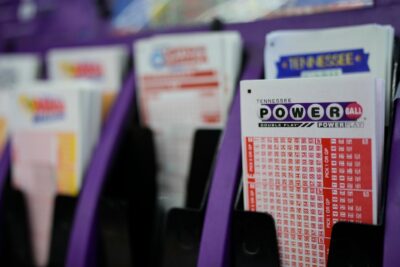
Powerball will be drawing its winning lottery numbers Monday night for a record 46th time since its last jackpot was claimed, as a string of failed sweepstakes ballooned the top prize to $1.6 billion.
So far, it’s the 5th-largest jackpot in U.S. history after more than three months without a Powerball winner. The game’s long odds created a massive windfall that has enticed people to splurge on $2 tickets ahead of the live drawing at 10:59 p.m. ET Monday night.
Lottery officials made the odds tougher in 2015 to create these humongous jackpots and draw more attention, while also making it easier to win smaller prizes.
Experts say it’s a sign the lottery is operating exactly as designed, and that no one should really expect to match all six numbers and make a killing. Still, somebody will likely win at some point, and many players are hoping to be that lucky winner.
“Everybody wants to be a millionaire,” said Saqi Anwer, an Atlanta gas station manager who sold $800 worth of tickets on Saturday.
How much would the winner take home?
Monday’s estimated $1.6 billion jackpot has a cash value of $735.3 million.
That means a winner can choose to be paid the whole amount through an annuity, with an immediate payment and then annual payments over 29 years that increase by 5% each time. Winners almost always opt for the up-front cash value, however both eye-popping figures are before taxes.
The last time someone won the Powerball top prize was on Sept. 6, when players in Missouri and Texas won $1.787 billion — the second-highest jackpot in U.S. history.
Matt Strawn, who chairs the Powerball Product Group, said in an interview that nothing special predated back-to-back billion-dollar jackpots this year other than the odds of the game. Still, he said it would be magical for a winning ticket to be cashed in during the holidays.
“Imagine if someone is giving the gift of a winning Powerball ticket away, whether it’s in a stocking or a thank-you note to your mail carrier,” Strawn said.
How does the prize rank among the largest jackpots ever?
Monday’s potential bounty now tops the existing 5th-biggest jackpot of a $1.586 billion drawn on Jan. 13, 2016.
Four other jackpots, all from the past three years, have bested the current prize. The biggest U.S. jackpot ever was $2.04 billion back in 2022.
That lotto winner bought the ticket at a Los Angeles-area gas station and opted for a lump-sum payment of $997.6 million.
In Atlanta on Sunday, players were lining up to get their tickets ahead of Monday’s drawing.
“My wife encourages me to buy a ticket because she wants to go on a big trip and she wants to do something good in society,” Bob Wehner said outside a car wash. “And she thought, ‘Well, we can do both if we win, for crying out loud!’”
Ronan Farrell, a middle schooler, speculated about buying an Xbox and a Lamborghini if his family won.
“With an Xbox controller as well,” he added.
What are the odds of winning? Not good
The odds of winning Monday’s jackpot are 1 in 292.2 million, according to Powerball. Before the switch a decade ago, the odds were 1 in 175 million. Players now have a 1 in 24.9 chance overall of winning some kind of prize.
Tim Chartier, a Davidson College math professor, said he’s never bought a lottery ticket despite knowing those odds inside and out.
“Picking a winning lottery ticket is equivalent to selecting one marked dollar bill from a stack 19 miles high — roughly the height of more than 115 Statues of Liberty,” or 30 kilometers, Chartier said.
“If you have the funds and you enjoy dreaming about a billionaire life, enjoy the ride. Of course, you could win,” Chartier said. “But when the numbers don’t fall your way, recognize that the odds were never in your favor — and that the twinkle of possibility is what made the journey worth the almost-certain letdown.”
___
Associated Press videojournalist Emilie Megnien in Atlanta contributed to this report.
___
Olivia Diaz is a corps member for The Associated Press/Report for America Statehouse News Initiative. Report for America is a nonprofit national service program that places journalists in local newsrooms to report on undercovered issues.
Olivia Diaz, The Associated Press
-31