


Small victories key to fitness resolutions
By Lethbridge Herald on January 12, 2026.
 HERALD PHOTO BY JOE MANIO
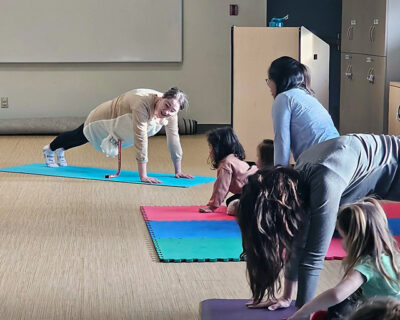
Teddy Bear Yoga is a group exercise class offered by the Lethbridge Public Library. Participating in group exercise can help individuals maintain their exercise resolutions.
HERALD PHOTO BY JOE MANIO
Teddy Bear Yoga is a group exercise class offered by the Lethbridge Public Library. Participating in group exercise can help individuals maintain their exercise resolutions.By Joe Manio
Local Journalism Initiative Reporter
Every January, millions pledge to eat better, lose weight, or hit the gym—but for many, those health resolutions fizzle before Valentine’s Day. While the start of the year sparks motivation, studies show that most people abandon their fitness goals within weeks making “New Year’s resolution fatigue” an annual ritual.
Millions vow to get fit each January, but research shows most abandon their goals quickly. About 23–26% quit within the first month, and roughly 40–47% have given up by March. By the end of the year, only 8–10% are still sticking to their original resolutions.
“It’s the mental state of it being able to actually still convince yourself to stay committed to a fitness routine right or a proper dietary routine,” says personal trainer and fitness instructor Trevor Loman. “And oftentimes when I work with people, my goal is I want to turn coming into the gym less of a chore, and something that you get excited doing.”
Exercise-related New Year’s resolutions often fail because goals are vague or unrealistic, plans are poorly defined, and motivation fades when results are slow. Broad aims such as “get fit” or overly ambitious targets can lead to discouragement after early setbacks, while the lack of a clear routine allows workouts to be pushed aside by daily demands.
Many people also give up when physical changes do not appear within weeks, overlooking that the benefits of regular exercise take time to develop.
People are more likely to stick with exercise-related New Year’s resolutions by setting specific, realistic goals, building workouts into a regular schedule, and focusing on consistency rather than quick results.
“There’s a sort of rule of power that they consider. It’s called kidlands law. That’s saying, if you write down a problem, you’ve already solved half of it, and that concept can be applied to your fitness goals or New Year’s resolution as well,” says Loman.
“If you understand and know what you’re wanting to achieve; and especially if you focus on the short-term goals and small victories,as opposed to the overall goal in the end, you’re going to be a lot more satisfied.”
Clear targets help prevent early discouragement, while treating exercise like an appointment makes it easier to maintain a routine. Emphasizing long-term habits over rapid physical changes can also help sustain motivation.
Research suggests that consistency during the early months helps turn resolutions into lasting habits. By this point the initial novelty has worn off and gym-goers who persist often benefit from physical improvements, improved mood, and established routines that make workouts feel automatic.
Those who maintain a gym routine through March or April are far more likely to continue for the rest of the year because exercise has started to become a habit rather than just a resolution, according to habit researchers. Consistency, visible results, and established routines help turn initial motivation into lasting fitness habits.
“See those little victories and wins come over a short amount of time, than wanting to get to your end goal very quickly. You can’t jump from A to B (in one shot) you have to take all those individual steps that take you A to B” says Loman.
For those struggling to keep their resolutions, Loman recommends small, repeatable actions, social support, and structured routines to increase the odds of success. Personal trainers and group fitness classes can significantly improve adherence by adding accountability, structure and social support.
Trainers help set realistic goals and adapt workouts as fitness improves, while group classes create routine and motivation through shared commitment, making it easier for people to stick with their resolutions over time.
By setting realistic goals, building exercise into a regular routine and focusing on long-term habits rather than quick results, people can improve their chances of sticking with their resolutions. The key is treating fitness not as a January challenge, but as a year-round commitment.
“If you’ve already gotten yourself to the gym or if you have a home gym and you’ve just put yourself in that space, you’ve already conquered the hardest part and that’s getting it right. Just look for the joy in it,” says Loman.
19-18