


Warm spell gives city head start on winter pothole repairs
By Lethbridge Herald on February 5, 2026.
 Herald photo by JOE MANIO
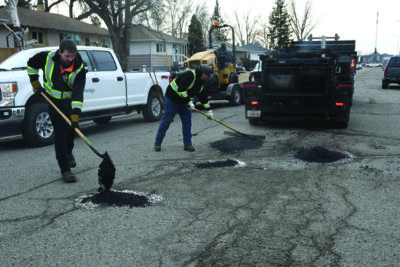
City crews repair potholes on a north side street on Wednesday by patching winter-damaged roads with hot asphalt, which was produced in-house (using recycled asphalt) to extend the life of the pavement.
Herald photo by JOE MANIO
City crews repair potholes on a north side street on Wednesday by patching winter-damaged roads with hot asphalt, which was produced in-house (using recycled asphalt) to extend the life of the pavement.By Joe Manio
Local Journalism Initiative Reporter- Lethbridge Herald
Potholes—those rim-bending reminders of freeze-thaw cycles—typically announce themselves in March and April. But this February, an unusual stretch of warmer weather has given city crews a rare opportunity to tackle road repairs early, patching hazards before they grow worse.
With snowmelt seeping into cracked pavement and refreezing overnight, winter is prime time for pothole formation. Add traffic and heavy vehicles to the mix, and small fractures quickly become craters. This year, Transportation Operations crews are taking advantage of above-seasonal temperatures to fix existing potholes and small utility cuts while conditions allow.
“This winter was very challenging with all the snow and ice on the roads, so that’s why we see so many potholes right now,” says Juliane Ruck, the City of Lethbridge’s transportation operations manager.
For drivers, cyclists and pedestrians alike, the work may feel minor—a quick patch here, a lane closure there—but the implications are citywide.
Lethbridge’s road network takes a beating each winter, and delaying repairs can mean higher costs and rougher roads come spring. Early intervention helps slow deterioration, reduces vehicle damage complaints and improves safety on busy routes.
Potholes consume a significant portion of the city’s annual road maintenance budget. According to Ruck, that budget is about $2.3 million, with roughly $500,000 spent addressing potholes in recent years.
“It’s preventative maintenance. If we can fix these issues right away it will extend the life of the road,” she says.
Under normal winter conditions, the city relies on cold asphalt, a temporary fix often needing replacement multiple times before spring. Asphalt plants are closed, and hot mix isn’t available. This year, however, the city’s asphalt recycling machine is changing that equation.
The recycler allows crews to produce hot asphalt during warmer winter days, keeping it heated in insulated hot boxes so it binds properly with existing pavement. The result is a longer-lasting repair—even in February.
The city conducts temporary winter maintenance on potholes as weather permits. The process ramps up when hot asphalt is available, which crews received earlier this month and are now using to tackle the pothole problem.
The repair itself is relatively quick. The affected area is cleared of loose debris and moisture, then coated with tack oil.
“The oil acts like a glue to connect the old asphalt with the new asphalt, to avoid future water infiltration and a new pothole forming,” Ruck says.
After the asphalt is shoveled onto the area, it’s spread evenly with a rake and rolled with a compactor.
Priority is given to potholes that pose a hazard in driving lanes on busy streets. Side-street repairs may take longer depending on traffic and road condition. Roads in very poor condition are flagged for future overlays, guided by the city’s paving quality index.
City officials say public reporting plays a key role in keeping the repair season on track. Residents are encouraged to report potholes by calling 311 or submitting a request online.
Motorists are also asked to slow down in construction zones and obey posted signage, especially as crews work outside peak traffic hours. Cyclists are reminded that bike lanes and boulevards are just as susceptible to cracking and should be navigated with caution.
Approaching potholes slowly—when they can’t be safely avoided—can reduce damage to vehicles and the road itself, officials say.
While winter repairs won’t eliminate potholes entirely, the early start helps reduce the severity of spring damage and spreads repair work more evenly through the year.
As temperatures continue to fluctuate, the cycle of melting and freezing isn’t over. But for now, a brief break in winter has given Lethbridge a chance to get ahead of the problem—one patch at a time.
For residents tired of dodging craters on their daily commute, that’s a small but welcome sign that spring may arrive with smoother roads underfoot.
23-22