

Poll
Do longer days actually improve your mood?
- Yes (70%, 332 Votes)
- No (30%, 141 Votes)
Total Voters: 473
 Loading ...
Sponsored
Ash Wednesday coincides with the start of Ramadan
By Lethbridge Herald on February 18, 2026.
 CP PHOTO
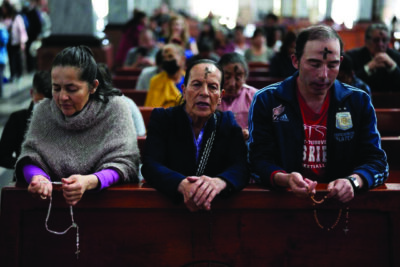
Catholics kneel in prayer after receiving ashes on their foreheads, beginning the 40-day season of fasting and reflection that this year coincides with the start of Ramadan.
CP PHOTO
Catholics kneel in prayer after receiving ashes on their foreheads, beginning the 40-day season of fasting and reflection that this year coincides with the start of Ramadan.By Joe Manio
Lethbridge Herald
On rare years the calendar aligns in a meaningful way: Ash Wednesday, the Roman Catholic call to repentance, and the first day of Ramadan, the Islamic month of fasting, fall on the same day. For members of both faiths, the overlap invites reflection on a shared practice that transcends doctrine: fasting as an act of devotion.
Though Catholicism and Islam differ in belief and ritual, both Ash Wednesday and Ramadan emphasize self-discipline and spiritual renewal.
Catholics begin Lent by receiving ashes on their foreheads and abstaining from meat on Fridays—a practice that continues for 40 days until Easter.
Muslims fast from sunrise to sunset during Ramadan, which lasts about 29 to 30 days, abstaining from food, drink, and other indulgences. In both traditions, fasting fosters self-control, empathy, and devotion, linking the faiths in a shared rhythm of sacrifice.
For Catholics, Ash Wednesday is a day of humility and remembrance.
“Before becoming a priest, Ash Wednesday and Lent were times of quiet and reflection,” says Fr. Kevin Tumback of All Saints Parish. “As a priest, it’s more about the needs of the people—helping them refocus on Christ in their lives, which for many means struggling to find quiet time with Jesus.”
Catholic fasting begins modestly: no meat on Ash Wednesday and Fridays during Lent, sometimes paired with additional acts of penance or charity.
“Fasting and abstinence are there to help us recognize that something has changed, that something is supposed to be different. It is easy for one day to be just like every other day, one meal to be just like every other meal, and Lent is supposed to be different.”
“Through fasting, we remember the hunger in this world, the people struggling, and the blessings we have—and we act through almsgiving,” he says.
Other Christian traditions echo this practice: Anglican, Episcopal, Lutheran, and Methodist congregations often encourage giving up meat—or other favorite foods—on Fridays, while Orthodox Christian traditions may include fasting from meat, dairy, and other animal products on certain days. Across denominations, the goal is the same: creating space for reflection and drawing closer to God.
For Muslims, Ramadan is a structured pause from ordinary life. From dawn to sunset each day of the month, adherents abstain from food and drink, aiming to cultivate discipline, empathy, and awareness of God’s presence. Fasting during Ramadan also encourages generosity and community: Muslims give charity, strengthen family ties, and share iftar meals each evening to break the fast together.
Fasting in both faiths is more than physical restraint. Lent and Ramadan invite self-examination, prayer, and acts of kindness. Catholics may take on daily reflections, charitable acts, or extra church attendance, while Muslims often read more Quran, increase charity, and gather for nightly iftar meals. In both traditions, food becomes a vessel for spiritual discipline rather than mere sustenance.
There is also a rhythm to abstaining that teaches patience and mindfulness. Ash Wednesday and Ramadan begin with visible markers—ashes or the new moon—but the essence lies in daily commitment. Fr. Kevin notes,
“When we feel the hunger of an empty belly, when we stay away from favorite foods, we are invited to reflect on how others might feel who struggle with hunger and what we might be able to do for them,” he says.
At All Saints Parish, Fridays during Lent include community practices such as Adoration, meatless soup suppers, teaching sessions, and the Ritual of Benediction—moments to gather, reflect, and prepare for Easter. Parishioners balance fasting with daily life by eating smaller, reflective meals rather than observing a strict fast.
“It’s not that hard. Our fast is about eating less and being reflective,” says Fr. Tumback.
When Ash Wednesday and Ramadan coincide, it serves as a reminder that the human impulse toward reflection, humility, and connection with the divine is universal. Two traditions, separated by centuries and continents, meet in the simplest of ways: pausing, abstaining, and remembering what truly matters. In that quiet, disciplined space, the body is still, and the spirit whispers.
20-19