

Poll
Do longer days actually improve your mood?
- Yes (70%, 332 Votes)
- No (30%, 141 Votes)
Total Voters: 473
 Loading ...
Sponsored
U of L neuroscientist talks CTE awareness
By Lethbridge Herald on February 26, 2026.
 SUBMITTED PHOTO
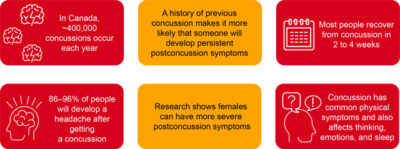
Above are facts about concussions.
SUBMITTED PHOTO
Above are facts about concussions.By Joe Manio
Lethbridge Herald
February marks International Chronic Traumatic Encephalopathy (or CTE Awareness Month); a time to talk about the degenerative brain disease linked to repeated head injuries and concussions. While it has made headlines in professional sports, researchers say it’s not just a big-league issue.
Here in Lethbridge and across southern Alberta, hockey rinks, football fields, rodeo grounds, ski hills — and even film sets — carry some level of risk.
Researchers in the Department of Neuroscience at the University of Lethbridge say one major misconception is that a concussion is only serious if someone loses consciousness.
“In reality, most concussions occur without loss of consciousness,” says neuroscientist Dr. Gerlinde Metz. “Symptoms such as headache, confusion, dizziness, visual disturbance, or changes in mood and sleep are often more telling.”
Another misunderstanding is that a concussion must be minor if a brain scan appears normal.
“Standard CT or MRI scans often look normal because the damage may be too small to detect, That does not mean it is insignificant,” Metz says.
Most people recover fully with proper care. But returning to activity too soon can prolong symptoms and increase risk. The effects of repeated injuries can also accumulate over time.
“Multiple concussions lead to more profound cumulative damage and can make it more difficult to recover. Repeated impacts may also promote neurodegenerative diseases, such as dementia, later in life,” she says.
CTE develops gradually after repeated head trauma and may not show symptoms for years. Those symptoms can include memory loss, confusion, mood changes, depression, impulsivity, and cognitive decline.
Public awareness of head injuries has grown significantly. In 2009, actress Natasha Richardson died after what initially seemed like a minor skiing fall. She declined medical treatment at first, but her condition deteriorated hours later — a sobering reminder that even seemingly mild head injuries should be taken seriously.
More recently, hockey legend Bobby Hull was posthumously diagnosed with stage 2 CTE after his death in 2023. His family’s decision to share the diagnosis reinforced that repeated impacts — even in sports deeply rooted in Canadian culture — can carry long-term neurological risks.
Importantly, professional athletes are not the only ones at risk.
“Professional players may experience greater cumulative exposure because of intensity and duration of play, but youth and recreational athletes are also vulnerable,” says Metz.
The concern for young athletes is developmental. The brain continues maturing into the mid-20s, meaning impacts during childhood and adolescence may affect cognitive and emotional development in ways researchers are still studying. Older adults may also face longer recovery times.
Another high-risk group often overlooked: stunt performers. Metz notes collaborators working with stunt professionals have identified them as facing some of the highest exposure to repeated head impacts — a reminder that CTE risk extends beyond traditional sport.
For families in Lethbridge, the message is clear: protect the brain from repeat injury.
“The most important message is to prevent a second concussion before full recovery from the first, One concussion that is properly managed often resolves without long-term consequences. The greatest risk comes from repeated head impacts before the brain has healed,” Metz says.
If a head injury is suspected, stop the activity immediately. Don’t “shake it off.” Seek medical assessment. Persistent headache, dizziness, nausea, confusion, blurred vision, unusual fatigue, mood changes, or sleep disruption should never be ignored.
Early diagnosis, taking a break from play, and a gradual, medically supervised return to school, work, or sport are critical. Prevention matters too: properly fitted helmets, adherence to rules, reducing high-risk contact in youth leagues, and encouraging honest symptom reporting all reduce long-term risk.
Organizations such as the Concussion Legacy Foundation Canada offer guidance on concussion prevention and safe recovery. Schools and sports associations across southern Alberta have strengthened concussion protocols in recent years.
There is reason for cautious optimism. Improved education, better equipment, and evolving return-to-play guidelines are making a difference. Research into CTE continues to expand, with scientists working toward earlier detection and better understanding of risk.
For Lethbridge families, the takeaway this February is simple: brain health matters. Invisible hits can leave lasting damage — but informed communities can protect themselves.
25-24