

Poll
Do longer days actually improve your mood?
- Yes (70%, 332 Votes)
- No (30%, 141 Votes)
Total Voters: 473
 Loading ...
Sponsored
Challenges , pajamas and the power of a library card
By Lethbridge Herald on February 27, 2026.
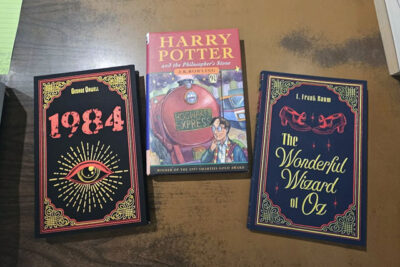 Herald Photo by Joe Manio Copies of 1984 by George Orwell, Harry Potter and the PhilosopherÕs Stone by J.K Rowling and the Wonderful Wizard of Oz by L. Frank Baum have all faced bans. OrwellÕs dystopian novel has been challenged for itÕs political themes and sexual content.
RowlingÕs fantasy has face objections over depictions of witchcraft and magic. And BaumÕs classic has been contested over alleged political symbolism and occasional political concerns about language or violence.
Herald Photo by Joe Manio Copies of 1984 by George Orwell, Harry Potter and the PhilosopherÕs Stone by J.K Rowling and the Wonderful Wizard of Oz by L. Frank Baum have all faced bans. OrwellÕs dystopian novel has been challenged for itÕs political themes and sexual content.
RowlingÕs fantasy has face objections over depictions of witchcraft and magic. And BaumÕs classic has been contested over alleged political symbolism and occasional political concerns about language or violence.By Joe Manio
Lethbridge Herald
As school library debates continue, Lethbridge Public Library leans into Freedom to Read Week with cozy — and quietly defiant — programming.
Every February, librarians across Canada mark Freedom to Read Week — a national campaign that defends intellectual freedom and pushes back against censorship. This year, it feels especially urgent.
Recent controversies over school library collections in Alberta have reignited debates over which books belong on shelves — particularly titles dealing with sexual content, LGBTQ2S+ themes, and race. While most disputes happen at the school board level, the broader conversation has put libraries everywhere in the spotlight.
At the Lethbridge Public Library (LPL), staff say the week hits close to home. It kicked off Monday evening with “We’re Comfy Reading Banned Books,” where participants were encouraged to wear pajamas.
“We live in a democratic society, and intellectual freedom is a cornerstone of that,” said Jennifer McDavid, facilitator of the event. “Freedom to Read Week is both a celebration and a reminder that we champion people’s right to read what they want — and to have access to those books at the library.”
A quick history: Freedom to Read Week started in 1984, when Canadian librarians, publishers, and booksellers organized to push back against attempts to restrict access to certain materials.
Fittingly, one of the titles on display at LPL’s first event was George Orwell’s 1984 — the dystopian classic about surveillance, censorship, and manipulation of truth.
It has been consistently targeted, challenged, and banned since its 1949 publication due to its anti-government, political, and sexual content.
Cited as perhaps the most banned book of all time in America, it is frequently targeted for being “pro-communist” (despite being anti-totalitarian) or “inappropriate,” yet it remains a staple of banned book discussions.
Challenges to library collections are rising. Associations across Canada have reported more cases since 2020, and in the U.S., the American Library Association has documented a sharp spike in attempted book bans in schools and public libraries since 2021.
Supporters of challenges say schools need to curate age-appropriate materials. Critics argue that removing titles — especially those representing marginalized voices — narrows young readers’ understanding of the world.
Public libraries operate differently, McDavid notes.
“At the public library, we empower parents to make decisions for their children,” she said. “We label materials and provide information so families can make informed choices about what they or their children read.”
LPL has a formal reconsideration process for anyone wishing to challenge a title. Patrons fill out a request form, the collections committee reviews it, consults professional reviews, and issues a decision.
“We haven’t had any formal challenges that I know of,” McDavid said. “There’s always conversation, and we’re aware of what’s happening elsewhere, but we remain committed to parental choice and intellectual freedom.”
Cozy, not combative: Instead of turning the week into a debate, LPL leans into warmth and accessibility. Participants of all ages are invited to grab a snack, put on pajamas, and spend time with frequently challenged books.
“I thought it would be more fun that way,” McDavid said. “The idea is to have these diverse titles available and let people sit down and read comfortably. We’re comfy reading these books — they’re not scary. They’re just different perspectives. You might learn something.”
The library is also hosting a Banned Books Readers’ Theatre at Theoretically Brewing Co., where excerpts from books challenged in Canada will be read aloud in a relaxed setting.
The tone may be gentle, but the principle is firm.
“Our role isn’t to tell people what to think,” McDavid said. “It’s to provide access to a wide range of ideas so people can decide for themselves.”
Why it matters: In an era of heated school board meetings and viral outrage on social media, Freedom to Read Week is a quieter reminder: intellectual freedom often starts with something as simple as a library card.
For McDavid, hope amid the controversies is straightforward.
“That the library is still here,” she said. “And that we’re committed to sharing all of those ideas.”
In Lethbridge, defending that commitment won’t involve megaphones or marches. It will involve pajamas, paperbacks — and, this year, a pristine copy of 1984 sitting calmly on a display table.
27-26