


Lethbridge’s temporary mobile overdose prevention unit closing
By Lethbridge Herald on March 24, 2026.
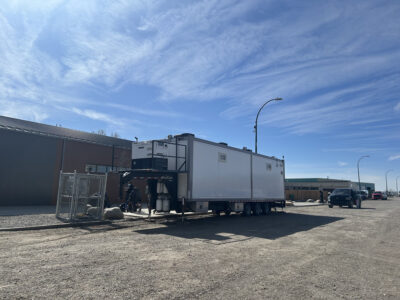 Herald Photo by Alejandra Pulido-Guzman
The province has announced the closure of the temporary mobile overdose prevention unit, with a date of closure yet to be determined.
Herald Photo by Alejandra Pulido-Guzman
The province has announced the closure of the temporary mobile overdose prevention unit, with a date of closure yet to be determined.By Alejandra Pulido-Guzman
Lethbridge Herald
Mayor Blaine Hyggen spoke to media on Monday and said the province announced Friday they will be closing the temporary mobile overdose prevention unit located here in Lethbridge.
Hyggen said he wrote a letter to the Alberta government to request the conclusion of the temporary mobile overdose prevention unit here in Lethbridge, based on the province’s plan of transition to recovery-focus services, and similar closures elsewhere.
“We anticipated their decision that an announcement would be coming at some point this year but didn’t know when as the provincial government’s making the decision,” said Hyggen.
He said the decision has always been up to the provincial government based on research and evidence.
Hyggen read a statement from the province he received Friday and said, “Evidence shows that connecting individuals to treatment and recovery services leads to better long-term outcomes and systems that leave people trapped in cycles of addiction.”
“Recent peer reviewed research from the Canadian Centre of Recovery Excellence, examining the closure of the Red Deer overdose prevention site, found no increased mortality, emergency department visits, or ambulance calls among users after the site closed. Study also found that more individuals began opioid agonist treatment following the closure of the site.” said the provincial statement.
Hyggen said that since 2023, there has been an 89.7 per cent decrease in the rate of substance abuse deaths in Lethbridge.
“Since the last full year of the SCS (Supervised Consumption Site) operating until today, we’ve seen a 91 per cent decrease in site visits to the temporary OPS (overdose prevention unit),” said Hyggen.
He said in 2023, EMS averaged 33.5 opioid related events per month, and in 2025 they averaged seven per month, which is an 80 per cent decrease.
“In the December letter, on behalf of council, I also asked for the province to consider ongoing funding from the OPS service to be reallocated to other supports here in Lethbridge,” said Hyggen.
He said council wanted to make sure those dollars would be reallocated within our community to recovery-based approach and to some of the services that we would be lacking by having the shutdown of that service.
He said on Friday they found out the funding will be reinvested into expanded addiction treatment, medical d-dox, recovery supports, and 24-hour outreach teams that will help more people move from crisis towards recovery.
“In Lethbridge, drug consumption services will transition to a new RAAM clinic, and that stands for Rapid Access Addiction Medicine. So, it’s going to be operating five days a week to provide the same day assessment, medication initiation, and pathways to withdraw management,” said Hyggen.
He said 10 new medical withdrawal management beds will be added, enabling immediate on-site stabilization and smoother transitions into recovery beds and a 24/7, outreach recovery response team, continuing overdose response, and direct connection to health and recovery services within the surrounding area.
“All new services will be based at the Lethbridge Wellness Shelter, delivered in partnership with the Blood Tribe Department of Health, and I do want to make sure that I give a huge thank you to the Blood Tribe Department of Health for their ongoing efforts here in the city,” said Hyggen.
18-17