


From a Ridge in France to Lethbridge:
By Lethbridge Herald on April 9, 2026.
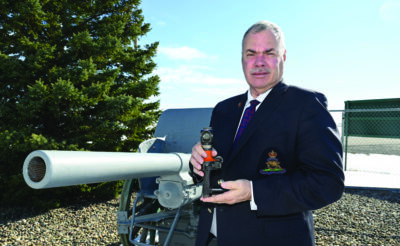 Holding History From Vimy Ridge
Why Vimy Still Matters
By Joe Manio
The ridge rises gently in northern France, almost unremarkable at first glance—until you realize how many never came back down.
Every April 9, Canadians pause to remember Battle of Vimy Ridge, a fight that helped define a nation still finding its voice. Known as Vimy Ridge Day, it’s not just a date on the calendar—it’s a story of sacrifice, innovation, and identity that still echoes far from the trenches, including right here in Lethbridge.
For those unfamiliar, Vimy Ridge Day marks the anniversary of the first time all four divisions of the Canadian Corps fought together during the First World War. Between April 9 and 12, 1917, they succeeded where previous Allied assaults had failed, capturing a heavily fortified German position. It was part of a larger offensive, but for Canada, it became something more: a defining moment often described as the country’s coming of age on the world stage after Confederation.
“Vimy Ridge Day is set aside to remind all Canadians… that Canadians first fought together and successfully took Vimy Ridge,” says Glenn Miller, a director with the Lethbridge Military Museum and a member of the Royal Canadian Legion.
That success came at a cost—more than 10,000 Canadian casualties—but it also came with a level of planning and coordination that was new. Canadian troops trained extensively, studied detailed maps, and used innovative tactics, including the creeping artillery barrage that allowed infantry to advance under a moving curtain of fire. Even small technological changes, like improved artillery fuses that detonated on impact instead of burying harmlessly in the ground, made a crucial difference.
But history doesn’t live in textbooks alone. In Lethbridge, it’s preserved in objects you can hold—like a German gun sight recovered from the battlefield, a war trophy that still bears the precision craftsmanship that once made it deadly. For Miller, artifacts like that are more than relics; they’re bridges.
“Through artifacts and stories, we’re able to keep that legacy alive,” he says. “Most families today don’t have that personal connection anymore.”
That’s where institutions like the museum and the Legion come in. Each year, the community gathers at the cenotaph for a wreath-laying ceremony, a quiet but powerful act of remembrance. It’s open to anyone—especially those with family ties to service, which were widespread during the First World War.
Local connections to Vimy go even deeper. The city’s armoury bears the name, and in nearby Waterton, Vimy Peak stands as a geographic reminder. More recently, a mountain in the area was given a Blackfoot name in honour of Indigenous soldier Joe Crow Chief, tying the legacy of Vimy to the region’s First Nations history.
Those connections matter, particularly as time creates distance.
“Most younger Canadians don’t know anything about Vimy Ridge,” Miller admits. “You’ll hear a blip around April 8th and 9th, and that’s it.”
Still, there are moments when the story cuts through. Local students who travel overseas and walk the battlefields—or stand among rows of white headstones in Canadian cemeteries—often return changed. Some are assigned a soldier’s name, transforming history from abstract to personal. Others take part in ceremonies, carrying flags or reading acts of remembrance in Indigenous languages.
“There’s nothing more powerful than being there,” Miller says. “You can read about it in a book, but until you walk the terrain, it’s not the same.”
That idea—of making memory tangible—is at the heart of “Lest we forget.” For Miller, it’s both a tribute and a responsibility.
“I think about the sacrifice of those who never came back,” he says. “But also the innovation—the ideas that helped save lives and ultimately win the battle.”
Even today, reminders of Vimy are woven quietly into Canadian life: etched into the Canadian National Vimy Memorial, printed on currency, and carried in the names of schools and streets. But without context, they risk becoming invisible.
And that’s the challenge—and the purpose—of Vimy Ridge Day.
Because the ridge still rises, whether we notice it or not. The question is whether we remember why it matters.
21-20