


Dr. Roberta Bondar, 1st Canadian woman in space, turns 80
By Canadian Press on December 4, 2025.
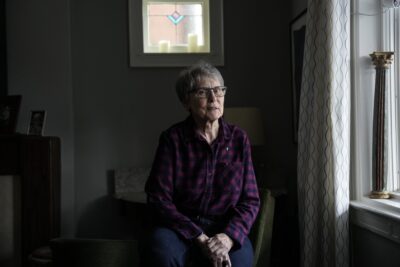
Dr. Roberta Bondar was the first Canadian woman and the first neurologist to travel to space.
As she celebrates her 80th birthday on Thursday, the Sault-Ste-Marie-born Bondar, reflects on the future of space exploration, her life and what’s to come.
On being the first Canadian woman in space:
Bondar holds four degrees and is a physician, scientist, environmentalist and award-winning landscape photographer and author.
She went to space in January 1992 aboard the space shuttle Discovery for an eight-day mission as a payload specialist, studying the effects of microgravity on the human body.
She was among Canada’s first cohort of astronauts selected in 1983.
Bondar explained it was a heavy responsibility for her to be the first Canadian woman in space. She noted that there is pressure on women to perform at a very high level and avoid any mistakes that could be unfairly used to undermine the credibility of other women.
“Unfortunately, when you’re the first at doing anything, people tend to take that experience, and if it’s bad, people say, ‘see, you shouldn’t have picked a woman’.” Bondar said. “That’s so dumb because if a man (had) messed up, you say ‘well, you know, that’s just the law of averages.'”
“But it always rests on the shoulders of a woman to do things exceptionally well,” Bondar added. “Not just well, but exceptionally well.”
Of the astronauts who’ve gone to space, the number of women is around 11 per cent.
“And in Canada, I mean, let’s face it, there has only been two women in over 30 years who’ve gone into space and that’s not enough,” Bondar said.
Bondar also said that it was crucial to have people on space missions who have a diversity of backgrounds as well as with the right level of expertise.
“We need to have depth and we need to have broad experiences and that includes things that women have that men don’t have and that men have that women don’t have,” Bondar said.
The role that stands out:
“Well, to quote a very famous man, it’s one small step. I mean, it really is,” Bondar said of her astronaut career. “It’s a step on many roads that I’ve taken.”
But for her, the most important thing in her life has been as a doctor — saving people’s lives and having influence over people’s health. From a mental health perspective, it’s environmentalism and getting people outdoors.
But being an astronaut did play a role — giving her credibility and a platform. She recalled a recent trip to a small Manitoba community where the youth thanked her for coming and asking all sorts of questions — not just about space, but life in general.
“They felt that I, because I had gone into space, that I had some inner wisdom as well as outer wisdom to be able to impart things to them in a way that they could understand that they couldn’t understand before,” Bondar said.
“So it’s that kind of credibility that being an astronaut has brought. It’s not just going to space and playing with my food and showing pictures of rockets and saying, wow, that’s some firepower and wasn’t she lucky that she didn’t die?” she said.
“It was rather looking at the planet differently. It was looking away from the planet differently, it was trying to give a message about hope and health and inspiration and about mental health as well as physical health.”
“I think if you’re asking me about my credibility and platform, it’s more about being an astronaut and having had a different view and different perspective and using that platform to reach people in a way that they wouldn’t have been reached otherwise.”
Books, birds and a foundation in her name:
Bondar served two terms as chancellor of Trent University. She later co-founded a non-profit organization in 2009 to promote environmental education and awareness.
In 2024, Bondar published “Space for Birds: Patterns and Parallels of Beauty and Flight.” The book looks at two birds — the Lesser Flamingo and the Whooping Crane, using space, aerial, and surface perspectives to raise awareness about habitat conservation.
She explained she was inspired to produce the book in part by something she observed during her space mission.
“When I looked at the Earth from space, I don’t have to say that it’s obvious, but it certainly is striking: you can’t hear anything. There’s no sounds from Earth unless you bring it with you,” Bondar said.
“And I truly missed the sounds of the natural world. I was brought up on the shores of Lake Superior, and the idea of being in a place where you didn’t hear a Blue Jay would have been a total silence.”
Birds are also at the heart of a second book she is planning. She said it would focus on five North American birds with ties to Canada, including the Arctic Tern, the Piping Plover and Sprague’s Pipit — birds that serve as important indicators of the health of the planet. “Deep in Avian Space,” is the book’s provisional title.
“When we see them — and if we don’t see them — it tells us about other things about our planet that we don’t really care to have going on,” Bondar said
On the next Canadian woman in space:
Bondar has high hopes for current Canadian astronaut Jenni Gibbons, who is serving as a backup for fellow Canadian Jeremy Hansen.
Early next year, Hansen is set to take part in the historic Artemis II mission.
The roughly 10-day sojourn around the moon and back could happen as early as February 2026 and Hansen would become the first non-American to travel beyond the lower Earth orbit.
Only two Canadian female astronauts have been to space since Canada began its program — Bondar in 1992 and Julie Payette, who flew in 1999 and 2009.
Bondar hopes Gibbons will get a chance to go soon.
“Hopefully she’ll be able to fly a mission, hopefully within the next five years. That would be very nice for her since she’s been there a long time,” Bondar said.
On advice for younger generations:
Dr. Bondar has some advice for younger generations about three core values she still holds true to this day.
“So I think the three things that I think of all the time is the value of curiosity that I never lose, because that propels me and my interest and my awareness of the world.
“The other thing is to to always be in the service of others,” she said. “Be considerate and open a door for people and not try to rush in front of somebody else to get off an airplane … that kind of courtesy that people tend to some days forget, but to always be aware of others.”
“And the third thing is to be the best one can be at whatever it is you try. I mean, you raise the bar for yourself. You don’t have to have other people raise the bar for you. You know how high you can put that bar.”
This report by The Canadian Press was first published Dec. 4, 2025.
Sidhartha Banerjee, The Canadian Press
-45