


Why northern First Nations still rely on diesel fuel — and what could power the coveted Ring of Fire
By Canadian Press on December 10, 2025.
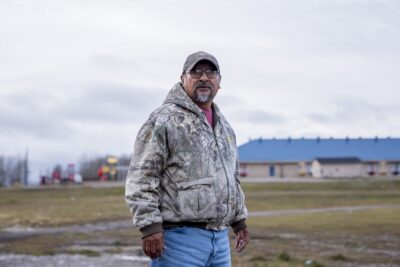
NESKANTAGA FIRST NATION — This story was supported by the Pulitzer Center.
—
The fumes coming through the walls of Neskantaga First Nation’s nursing station warned of a crisis with a familiar smell.
Diesel wafted from the flooded basement, a stench so strong it made people sick with headaches and nausea, residents said.
After they detected the scent, the building was shut down and with it the community’s only healthcare centre. Local leaders declared a state of emergency and more than half the community’s residents, including vulnerable children and elders, fled to Thunder Bay.
The suspected diesel leak this past April was not just an accident, but a reminder of the remote First Nation’s ramshackle infrastructure and the polluting, expensive fuel that powers it.
“It’s a nuisance,” said Neskantaga health board member Ryan Moonias of the diesel generators. His family of five spent around two months in a Thunder Bay hotel room in the aftermath of April’s emergency.
More than 200 remote and mostly Indigenous communities in Canada still depend on diesel generators for heat and power. The communities pay among the country’s highest electricity rates and have little to show for it, living with regular blackouts, pollution and the fear of a catastrophic spill.
In northern Ontario, a recent Indigenous-led project has connected a majority of First Nations to the province’s electricity grid. Yet in Neskantaga and eight other communities, the generators keep burning.
They are some of the closest to the Ring of Fire, a mineral rich crescent-shaped region in North America’s largest wetlands. Mining companies have staked more than 40,000 claims to lands packed with chromite, nickel, copper and other minerals used to make steel, batteries and electronics.
The Canadian Press visited Neskantaga and nearby Webequie First Nation in late October to speak with people about the pressing issues facing First Nations closest to a region coveted by industry and governments. Interviews with more than a dozen people — including community members and leaders, energy policy experts and government ministers — underscored how central power generation is to talks about the region’s future.
On mining, Webequie and Neskantaga are taking different approaches. The former has started to embrace resource extraction as a way to lift itself out of poverty. In Neskantaga, a community under the longest boil water advisory in Canada for 30 years running, leaders fear there will be little community benefit and major environmental expense.
Yet on energy, many in both communities agree the diesel needs to go. What’s less clear is what will replace it, and when.
Early talks are underway to explore a multi-billion-dollar transmission line project to connect the remaining diesel-reliant First Nation to the province’s grid. The promise of more reliable and affordable energy has been welcomed by several community leaders.
But with so much interest in the region’s minerals and hydroelectric potential, there are concerns that electrifying the Ring of Fire could facilitate a rush of industrial development at the expense of First Nation sovereignty.
Could First Nations be pressured to pledge their support for new mines in order to be connected to reliable energy?
“I think that’s what’s happening,” said Sol Mamakwa, a provincial legislator from Kingfisher Lake First Nation who represents the region as a member of the opposition NDP.
“I don’t agree with that approach. First Nations should not be put in that place.”
The Progressive Conservative government has played down those concerns and said First Nations will be an integral partner in the region’s energy plans.
“We’re going to get those transmission lines up there, one way or another, and bring electricity to these communities that are so badly needed,” Premier Doug Ford said a press conference last month alongside the chief of Marten Falls, who has supported the talks.
“People do not understand, myself included, (what it means) to live on diesel 365 days a year their whole lives,” Ford said.
Diesel generators were brought to remote First Nations, which were often excluded from broader energy infrastructure plans, around the mid-20th century, said Arthur Bledsoe, a senior analyst at the Pembina Institute who led a recent study of Indigenous-led clean energy policy in remote communities.
Seen by Ottawa as the cheapest and most reliable option for remote communities, the introduction of generators mirrored the government’s larger effort of enforced assimilation of Indigenous Peoples, he said.
On the island First Nation of Webequie, the hum of diesel generators by the airport is an almost nonstop reminder of the human and planetary health consequences of those decades-old choices. Diesel exhaust has, in general, been linked to higher rates of respiratory illnesses, and it produces more planet-warming emissions than natural gas, though less than coal.
“We all know diesel is really not good. It destroys the environment. We all know that,” said Bob Wabasse, who works on the community’s energy file.
The community’s aging housing stock, with its poor insulation and baseboard heaters, only exacerbates energy demand. But it can’t build much-needed new housing because, despite recent upgrades, the generators are nearing their limits again. When construction is greenlit, it can also face delays because of how difficult it is to bring materials in.
“We’re backlogged probably over 100 units, in terms of overcrowding. That’s a lot of units,” said Harry Wabasse, a band councillor.
Climate change is making it harder to get diesel into communities. Trucks must navigate winter roads built over frozen land and ice to get to Webequie, Neskantaga and other First Nations in the region, including Marten Falls. Those winter road seasons are becoming increasingly short and unpredictable, raising concerns about energy security.
When winter roads fail or a community needs an off-season resupply, the fuel is flown in, adding to already exorbitant costs. Energy prices, subsidized by various programs, are about five times higher than what people in Toronto pay for mid-peak rates and up to eight times higher for fly-in communities.
“It’s getting harder and harder to get all that diesel in,” Marten Falls Chief Bruce Achneepineskum said in an interview last month on the sidelines of an energy conference in Toronto where diesel reliance was top of mind.
Marten Falls has approvals for 10 new housing units and ambitions to get started on a detox facility and healing lodge, the chief said. Yet he’s been told to stop hooking up new buildings to its at-capacity diesel generators.
In the past, he said the community has been told to just build more diesel tanks and generators. The federal government’s latest “Band-Aid solution” is a proposal to convert recent builds back to oil heat just to help alleviate some of energy strain, he said.
“It’s problematic because it’s unsustainable. It goes against what’s happening in the world today in terms of moving away from fossil fuels,” he said.
“Let’s start talking real sustainability.”
The shift away from diesel is already underway. A solar project in Fort Severn, the most northern First Nation in Ontario along the shores of James Bay, has helped the community cut back on its diesel generation. Chief Achneepineskum says he’d like to see a solar project in Marten Falls too.
That shift has not always been straightforward. Gull Bay First Nation, whose lands were flooded by hydroelectric projects in the 20th century, partnered with Ontario Power Generation on a solar grid project to help reduce diesel generation in what was billed as an act of reconciliation. Now, the project sits idle because of technical issues and challenges with project partners, a recent Pembina Institute report found.
Other communities, including Webequie, have looked at biomass generation, where unused wood from sawmills is used to heat or power homes. The province has boosted the industry as a way to support jobs and energy reliability in the north, but the larger biomass industry has also faced criticism because it can release emissions on par with some of the most polluting fossil fuels, while forest regrowth can only absorb it over decades, worsening climate change in the near term.
Despite the challenges, northern Ontario is already home to one of the most promising case studies in Indigenous-led diesel reduction.
The 1,800-kilometre Wataynikaneyap transmission line has connected 15 formerly diesel-reliant First Nations to the grid since 2018, with plans to eventually connect two more. Wataynikaneyap, or the “line that brings the light” in Anishinaabemowin, is majority-owned and managed by a group of 24 First Nations, making it the largest Indigenous-led infrastructure project of its kind in Canada.
The $1.9-billion project, eventually supported by a $1.3-billion loan from the province and later backed by the federal government, has helped kickstart construction of dozens of new homes, at least six schools, an elders’ complex and other much-needed infrastructure, said CEO Margaret Kenequanash, a former chief of North Caribou First Nation.
“This has been First Nations-led from the beginning,” she said of the project.
Now, talks are being held on what it would take to build another transmission line into northern Ontario, this one through the Ring of Fire. The province’s energy planner has been asked to study options that would support new mines and hydroelectric power in the region and connect the nine remaining diesel-reliant First Nations in the north. As recently as 2014, the province had deemed four of those communities, to the north and south of the Ring of Fire, “uneconomic” to connect.
A transmission line could cost as much as $4.5 billion, according to preliminary findings from the Independent Energy System Operator. While it’s a hefty price tag, the IESO found the cost was comparable to the diesel status quo.
Leaders from several First Nations, including Webequie and Marten Falls, have expressed preliminary interest in the idea and suggested it could help alleviate many issues tied to diesel capacity.
The IESO said it has also formed a working group with the First Nations to help them identify solutions to some of their near-term energy challenges while talks continue.
Yet a question facing any future line is how it will balance industrial interests with community needs, said Bledsoe, the Pembina Institute analyst.
Not only are mining companies keen to secure power for potential future operations, but the province sees vast untapped hydroelectricity potential in the region that could help feed Ontario’s spiking electricity demand.
“If the First Nations are equal partners in the development decisions and their territorial sovereignty is respected, their right to consultation and free prior and informed consent is respected, then it could be a really positive way to lighten the financial load and make this project actually happen,” Bledsoe said.
“What we want to caution against is the project only happening because of these other sources of revenue and not delivering benefits to communities.”
Recent government initiatives have only fuelled concerns about respect for Indigenous sovereignty. First Nations leaders threatened to blockade mines when Ontario passed a bill that gave the province power to suspend laws in so-called special economic zones. It was followed by a similar federal law that grants cabinet the power to quickly designate federal approvals for projects deemed to be in the national interest by sidestepping existing laws.
In Ontario, documents unearthed through freedom-of-information laws show the province planned to “take immediate action” to designate such a zone in the Ring of Fire once the law passed. The province has since backed off and has no immediate plans to designate the region, though it remains an option if one of the mining companies needs help to speed construction.
At least one mining company decided it wouldn’t be waiting around for a more reliable transmission line in northern Ontario. Greenstone Gold Mines commissioned its own natural gas plant to power its mine northeast of Thunder Bay.
Talks about a line to the Ring of Fire are still in early stages. The IESO has not released its final report on its study and no company similar to Watay Power has come forward to build the project.
Ontario’s energy minister says the government is “serious about finding a way forward,” and expressed support for Watay Power’s model.
“Obviously the IESO has more work to do on the business case, but as a matter of public policy, the government is committed to this, and we said we will work to end diesel reliance in Ontario,” said Minister Stephen Lecce.
“We’ve got to swiftly build transmission capacity into the north to ensure that we have clean power, to support better quality of life, and also just to enable economic growth too, in that order.”
A spokesperson for Indigenous Service Canada said reducing reliance on diesel is a priority for the federal government. Although ISC is not “currently engaged” First Nations around the Ring of Fire on a grid connection project, “we are supporting upgrades to improve the reliability and capacity of their current diesel generation systems,” said spokesperson Jennifer Cooper.
In Neskantaga, boarded up windows spray-painted “CLOSED!!” covered the nursing station months after the flood and suspected diesel leak in its basement. The chief said the building would not survive the winter.
Distrust runs deep in a community where government promises can appear as broken as the basic infrastructure.
The First Nation relocated from its former reserve near a Hudson Bay trading post along the low-lying marshes of Lake Attawapiskat in the 1980s due to persistent floods and poor infrastructure, with promises of better conditions.
A water treatment plant was built in 1993, and failed shortly after. Today, bottled water is rationed as the longest boil water advisory in Canada endures despite promises to end it years ago.
A cultural and youth centre identified as a priority more than a decade ago remains unbuilt. A new police station is unused because no telecommunications carrier will provide service. Mold grows in basements of crowded family homes.
As Ontario prepares to invest billions in the Ring of Fire, the chief wonders: where are the investments in the people and the community whose lands have captured such attention?
“This is where most of our ancestors reside,” he said.
Stunted stands of tamarack and black spruce reach toward the horizon and vast peatlands and bogs surround the reserve. The landscape is known as Yehewi Aski and Bakitanaamowin Aki, or “the breathing lands”, absorbing planet-warming gas from the air and offering habitat to caribou, migratory birds and other creatures.
“That’s how we are prosperous. We never get prosperous from industry, but from the land we do.”
This report by The Canadian Press was first published Dec. 10, 2025.
— By Jordan Omstead in Toronto and Liam Casey in Neskantaga First Nation.
The Canadian Press
-71