

Five ways U.S. intervention in Venezuela could affect Canada
By Canadian Press on January 6, 2026.
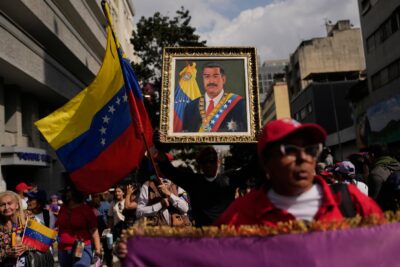
OTTAWA — U.S. President Donald Trump stunned the world on the weekend by ordering a military raid on the Venezuelan capital, capturing President Nicolas Maduro and bringing him to New York to face charges.
The move has challenged international law and could drastically reshape the situation in Venezuela, where violent repression and economic mismanagement — together with Western sanctions — have driven a migration crisis across North and South America.
Here’s how these drastic changes could affect Canada.
Oil
Trump says he plans to take control of Venezuela’s oil industry and encourage American companies to revitalize the sector, which fell into disrepair after years of government neglect and international sanctions.
Venezuela owns the largest known exploitable reserves of oil — heavy crude that requires the same kind of refinery processing as Alberta’s bitumen.
Analysts say it could take years and major investments to dramatically increase Venezuela’s production — but some believe the country could double or triple its current output of about 1.1 million barrels a day fairly quickly.
That could suppress the price Canada can seek for its oil — particularly if it’s competing for capacity at U.S. refineries. Analysts have noted that Canadian crude is often processed in refineries in the U.S. Midwest, not those along the Gulf of Mexico.
Conservative Leader Pierre Poilievre is urging Prime Minister Mark Carney to “immediately approve a pipeline to the Pacific Coast” to support Canadian oil exports. The prime minister has said his government is working to expand access to oil markets in Asia.
Migration
Groups assisting migrants in Montreal and other large Canadian cities have over the past decade reported a rise in the number of asylum claims from Venezuelan nationals, including those who crossed irregularly into Canada from the United States. The groups have cited worsening conditions in Venezuela and the Trump administration’s moves to tighten its policies on refugee claims.
Immigration and Refugee Board data suggests, outside of the COVID-19 pandemic, the number of Venezuelan citizens filing asylum claims in Canada has been gradually rising since 2013.
The number of claims received by the Immigration and Refugee Board peaked in 2023, when the tribunal recorded referrals for 3,054 Venezuelans. That figure includes both people who filed claims that year and earlier claims that had not yet reached the tribunal.
Canada has accepted most of those claims in recent years, while 10 to 20 per cent were rejected and some were withdrawn because the applicants abandoned their claims or were given residency through other programs.
Due to the humanitarian crisis affecting their home country, Canada has a policy of not deporting Venezuelan nationals under most circumstances, through “administrative deferrals.” If conditions in Venezuela improve, the Canada Border Services Agency could start removing Venezuelans with failed asylum claims or criminal convictions. But outbreaks of violence in the country could keep the current policy in place.
Sovereignty
Numerous observers have said that the successful capture of Maduro could embolden the Trump administration to intervene in other countries where it has talked of annexing territory, or whose governments it has maligned.
Trump and administration officials have talked of annexing Canada and the Danish territory of Greenland and have also issued threats against Colombia, Mexico and Cuba.
On Monday, White House deputy chief of staff Stephen Miller said Greenland should be part of the U.S. His wife Katie Miller posted on social media a map of Greenland covered with an American flag on social media Saturday and the word “soon.”
Analysts are watching to see if Maduro’s capture shapes Russia’s territorial ambitions and China’s pledge to seize the self-governing island of Taiwan.
France and Denmark have insisted that national sovereignty must be respected following Maduro’s capture. Canada’s statements have spoken more generally in support of international law.
Democracy
Regional experts say Canada, which has a reputation for supporting human rights activists in Venezuela, could co-ordinate with other countries to help Venezuelans choose their leaders.
“It’s increasingly unclear that the Trump administration has any intention of returning Venezuela to democratic rule,” said Max Cameron, a University of British Columbia professor specializing in Latin America.
Cameron pointed out that Trump has so far partnered with Maduro’s vice-president — which could be a means of propping up a brutal dictatorship while giving the U.S. a secure new oil source. It could also curb the number of Venezuelans fleeing for economic reasons — without restoring democracy.
Multiple countries, including Spain and Colombia, have said Maduro stole power after the 2018 election. But Trump has been dismissive of the current opposition in Venezuela and has claimed opposition leader Maria Corina Machado is “not respected.”
American media reports suggest Machado has been at odds with both the Trump administration and elements of the Venezuelan military and public service — whom she accused of propping up an illegitimate regime. Trump, meanwhile, has focused more on reaching economic deals with the current regime.
Cameron said Canada could advance its interests by helping Venezuelans build up their democracy, instead of being an accomplice to American actions in the region.
“Canada has fought for democratization of Venezuela. That should be our goal,” he said.
Cuba
Some within the Trump administration, such as Secretary of State Marco Rubio, have long called for regime change in Cuba, where the communist government has faced decades of steep American sanctions.
Cuban Americans who detest the regime in Havana have been an important voting block for Trump. Rubio, the son of Cuban immigrants, said after the capture of Maduro that Cuba’s government should worry about what the U.S. might do next.
David Carment, a professor of international affairs at Carleton University, noted that Venezuela has long propped up the economy of Cuba, where there have been street protests in recent months over blackouts and water shortages.
“Cuba is almost entirely dependent on energy imports from Venezuela,” he said. “Cuba is just on the precipice.”
Ottawa says Canada is Cuba’s second-largest source of direct investment. The island is also a top spot for Canadian tourists, who may require consular assistance if major infrastructure collapses or if there is widespread violence.
Louise Blais, a former senior Canadian diplomat, noted that Ottawa’s response to Maduro’s capture was relatively easy to craft since Canada does not have an embassy in Caracas. Responding to the forcible removal of Cuba’s leadership by the U.S. would be more challenging, she suggested.
“It was easier this time for … Canada’s government to say that we didn’t have diplomatic relations with the regime, that we didn’t recognize Maduro,” she said on a Monday episode of the Red Passport podcast.
“But if Trump does the same in a country like Cuba, we won’t have that excuse. There will be no place for us to hide and try to find a way around it.”
This report by The Canadian Press was first published Jan. 6, 2026.
— With files from The Associated Press
Dylan Robertson, The Canadian Press
44-43