


Don’t expect spike in arrests after B.C. ends decriminalization: police chief
By Canadian Press on January 15, 2026.
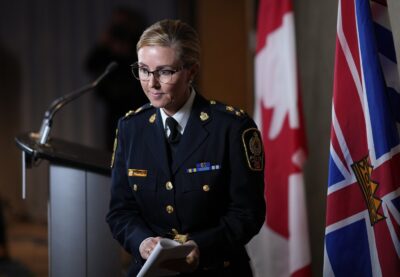
The chief of Victoria’s police department supports ending drug decriminalization in British Columbia, but says she doesn’t expect to see a spike in arrests once the program ends this month, since it was already wound back 20 months ago.
Fiona Wilson was originally a prominent advocate for decriminalization of personal possession of small amounts of drugs in 2023 when she was vice-president of the BC Association of Chiefs of Police, saying it had the “potential to address harms associated with substance use” as an “important part of an integrated approach.”
But Wilson, who was also Vancouver’s deputy police chief at the time, says police saw “really concerning situations of public consumption” when decriminalization began, and initially officers could rarely step in.
She changed her mind about the pilot program — which B.C. Health Minister Josie Osborne announced on Wednesday would not be extended — and Wilson says police in the province no longer support it.
In 2024, after advocacy from police, the B.C. government had the exemption to federal drug legislation amended to restrict possession to private homes and places where homeless people are legally sheltering, as well as designated health-care clinics.
Wilson says the changes “really gave police back those powers” to intervene and that once decriminalization ends she doesn’t expect there to be more arrests.
“The reality is the police aren’t going into people’s private residences to arrest them for simple possession because they’re using illicit drugs inside that private residence. We don’t have the grounds to do that,” she said.
“Many of those health facilities already have Section 56 exemptions,” she added. “We wouldn’t be going into a supervised consumption site to arrest people for consuming illicit drugs. So the rare circumstance where the (current) exemption would still impact police is indeed very, very, very rare.”
Wilson’s public stance on decriminalization took a major shift in 2024, when she testified to a federal parliamentary committee about the difficulties police were facing dealing with “problematic drug use.”
“If somebody has their family at the beach and there’s a person next to them smoking crack cocaine, it’s not a police matter, because a beach currently is not an exception to the exemption,” she said at the time.
This report by The Canadian Press was first published Jan. 15, 2026
Ashley Joannou, The Canadian Press
15-14