


Saskatchewan’s Moe, canola farmers say trade deal with China ‘very good news’
By Canadian Press on January 16, 2026.
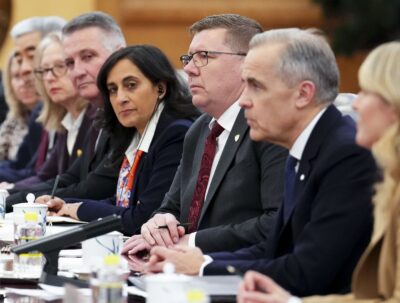
REGINA — Saskatchewan Premier Scott Moe and canola farmers are hailing Canada’s new trade deal with China as “very good news” that could restore exports for the major Prairie crop.
The deal will see China significantly reduce tariffs on Canadian canola seed — and at least temporarily remove tariffs on canola meal — in exchange for Ottawa making concessions on Chinese electric vehicles duties.
Moe, in a statement, said the deal should allow Canadian exports of canola and other agricultural goods to China to return to normal.
“Today demonstrates the importance to of foreign trade missions and shows what can be achieved when the federal and provincial governments and our export industries work together to strengthen our trade relationships,” he said Friday.
Prime Minister Mark Carney said Ottawa expects Beijing to drop canola seed duties to 15 per cent by March 1 and lift “anti-discrimination” levies on canola meal, peas, lobsters and crab from the same date to at least the end of the year.
In return, up to 49,000 Chinese electric vehicles will be allowed into the Canadian market each year at a 6.1 per cent tariff, instead of the current 100 per cent tariff.
It was Canada’s tariff on EVs that led China to retaliate last March with a 100 per cent tariff on Canadian canola oil, peas and other products, along with 25 per cent on pork and seafood products such as lobster.
China further implemented a 76 per cent duty on canola seed in August though the prime minister’s office said that figure was closer to 84 per cent when combined with other duties in place.
Friday’s deal came as welcome news for Canadian canola farmers.
“I think this is a heck of a good start,” said Andre Harpe, a farmer near Grande Prairie, Alta., northwest of Edmonton.
Before the deal was announced, Harpe, who is also chair of the Canadian Canola Growers Association, had said some farmers were thinking of making last-minute changes to what they planned on growing this year.
But he said there’s now less uncertainty: “This will help solidify plans.”
Bill Prybylski, the president of the Agricultural Producers Association of Saskatchewan, said the deal gives farmers peace of mind going into seeding.
Prybylski, who farms near Yorkton, Sask., northeast of Regina, said the agreement should bump up crop prices. “(The announcement) was somewhat unexpected, but very much appreciated that we have some measure of resolution,” he said.
He said he still had some concerns, noting the deal did not mention canola oil, which is currently subject to a 100 per cent tariff.
“This is certainly concerning that there is no relief on those tariffs on the oil, and that has an effect on the overall price that producers get for our canola seed,” Prybylski said.
Saskatchewan produces over half of Canada’s canola. China is the country’s second-largest customer of the Prairie crop.
Saskatchewan’s Opposition NDP said in a statement the deal is positive.
“I am very glad to finally see some much-needed progress on restoring Chinese market access,” NDP Leader Carla Beck said.
“Producers across this province have had far too many sleepless nights as one of our largest trading partners aggressively tariffed one of our largest exports.”
This report by The Canadian Press was first published Jan. 16, 2026.
Jeremy Simes, The Canadian Press
25-24