


Trump’s latest tariff threats will hurt U.S. just as much as Canada, experts say
By Canadian Press on January 24, 2026.
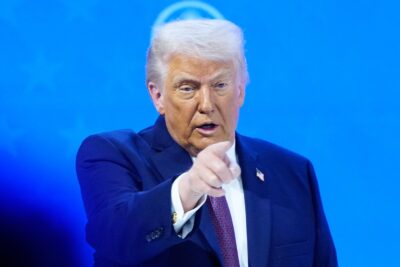
HALIFAX — International trade experts say U.S. President Donald Trump’s latest threat to impose 100 per cent tariffs on Canada will hurt his own economy just as much, if not more, than Canada’s.
They say that means Trump may ultimately look for an off-ramp to avoid the economic damage, similar to walking back threats to impose tariffs on eight European countries last week if Denmark didn’t hand ownership of Greenland to the U.S.
“Yes, he’s hurting Canadian businesses, of course, but he’s hurting U.S. consumers more. He has to know this,” Preetika Joshi, an assistant professor at McGill University’s faculty of management, said in an interview Saturday.
Referring to Prime Minister Mark Carney as “governor,” his old insult for former prime minister Justin Trudeau, the president’s Saturday morning social media post said if Carney thinks Canada can become a “drop off port” for China to send products into the U.S., he’s “sorely mistaken.”
“China will eat Canada alive, completely devour it, including the destruction of their businesses, social fabric, and general way of life,” the president wrote on Truth Social. “If Canada makes a deal with China, it will immediately be hit with a 100% Tariff against all Canadian goods and products coming into the U.S.A.”
Earlier this month, Carney committed to dropping Canada’s 100 per cent tariff on Chinese-made electric vehicles to just 6.1 per cent with an annual allotment of 49,000 vehicles. Canada first imposed the higher tariffs on Chinese EVs in 2024 in lockstep with the U.S. The deal with Chinese President Xi Jinping will see China lower most of its retaliatory tariffs on Canadian agricultural products, including lobster, crab and canola.
Unifor National President Lana Payne said in a statement that Trump is dipping into the old playbook, and it’s just another threat from the U.S. president. While she’s been critical of the Chinese trade deal due to its affect on her members building automobiles in Ontario, the real issue is Trump.
“He thrives on chaos,” Payne said. “Unifor has been crystal clear regarding our serious concerns about the deal on autos with China but none of that changes the fact that the root of the problem is a U.S. President who through tariffs is working to surgically destroy our industrial economy.”
She said Trump’s latest threat reinforces Canada’s need to act with strong industrial policies.
“The reality is it will also be American workers and businesses who are paying for his destructive policies,” she said.
She said those policies must be clear: if you want to sell in Canada, you need to build in Canada.
Romel Mostafa, an assistant professor of international business at Western University’s Ivey Business School, said Trump’s trip last week to the World Economic Forum in Davos, Switzerland didn’t go very well for him, with a snub on Greenland and Carney’s speech at the event grabbing world headlines.
Without naming the U.S. president directly, the prime minister warned that the old world order is dead and urged middle powers to band together as larger ones try to pressure them through economic coercion.
Mostafa said he wasn’t surprised Trump lashed out, and the China trade deal is not a way to flood the U.S. market with cheap Chinese imports.
“It’s a little bizarre to be picking on Canada because it is a very balanced, delicately struck agreement with China,” he said in an interview Saturday.
“So the details are there. And it’s not something that becomes a kind of a pass-through for the Chinese products to be produced here and then use (the United States-Mexico-Canada Agreement) to enter the U.S. Market. I’m not seeing it.”
The Office of the United States Trade Representative said Canada was the top destination for American exports in 2024, and Canada was the third-largest source of U.S. imports. More than $909 billion worth of goods and services were traded between the two countries.
About 85 per cent of Canadian goods are shipped to the U.S. without tariffs under a free-trade agreement. Most products outside the framework, also known as CUSMA in Canada, are subject to a 25 per cent tariff.
It was not immediately clear if Trump’s threatened tariffs would apply to CUSMA-compliant products. The trade deal is up for review this year.
This report by The Canadian Press was first published Jan. 24, 2026.
Devin Stevens, The Canadian Press
24-23