


Ukrainians push for permanent residency in Canada as war with Russia grinds on
By Canadian Press on February 10, 2026.
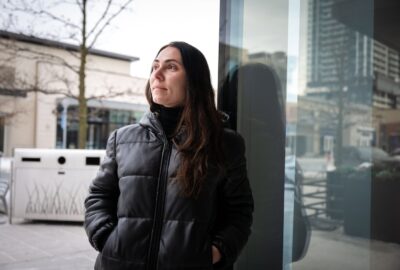
OTTAWA — Roksolana Kryshtanovych never planned on moving to Canada before Russia’s war, but the invasion made it impossible for her to go home to Ukraine.
In the years since Moscow launched its full-scale invasion in 2022, she said, Canada has become her new home. But without a path to permanent residency, she and thousands of other Ukrainians here face an uncertain future as the war drags on.
Immigration Minister Lena Diab has acknowledged many of these visa holders are no longer here temporarily — but the government has no concrete solution yet to their plight.
Now, her government is under new pressure to open a permanent residency pathway for the nearly 300,000 Ukrainians like Kryshtanovych who came to Canada through the emergency visa program.
“When the war started, I was in Poland and so that’s why my parents asked me, ‘Please don’t come back.’ And in March, Canada opened door for Ukrainians,” Kryshtanovych told The Canadian Press.
She now lives in Toronto, where she works for a financial services company. She said she hopes one day to buy a home and start a family here.
Launched in 2022, the Canada-Ukraine authorization for emergency travel, or CUAET, offered a three-year work or study permit to people fleeing the war.
With the fourth anniversary of Russia’s full-scale invasion fast approaching, many Ukrainians face limited options for seeking permanent residency.
Diab told The Canadian Press in January the government is aware some people on CUAET visas are here to stay.
“We now know it’s not temporary. They’ve been here for X number of years, and for the most part, people are working, they’re building a life, you know, they have children and so on. So I understand that,” she said.
“What I’ve been able to do so far as the minister is extend their status in Canada, whether it’s work or study, while we figure out what to do.”
Kryshtanovych is part of a group called United Ukrainians for Canada Foundation. It has organized a letter-writing campaign to press MPs to introduce a dedicated permanent residency pathway for CUAET visa holders.
Kryshtanovych said the group is aware of more than 25,000 letters that have been sent since their efforts began in September.
“It’s really an awful situation right now because people try to stay and not all of them can do this,” she said.
“A lot of people are like, ‘OK, I’m 41, I am 50. I have a job, I have job, pay taxes, I live here, I have friends, but I cannot stay here legally …'”
Canada’s express entry system for permanent residency uses a point formula that takes into account an applicant’s age, marital status, education level and official language proficiency.
Kryshtanovych said that for many Ukrainians, the language test is a barrier. She said many may lack access to the necessary documents or certifications for a permanent residency application, having fled a war zone.
Neither Daria nor Viktoria Vahina qualify for express entry through Canada’s permanent residency application system.
Daria came to Canada almost four years ago and works at Working Title Kitchen in Ottawa. Her mother Viktoria came and joined Daria last year following the death of her husband.
“We know what we’re doing for these three years, and then unfortunately we don’t know what’s happening,” Daria said.
“You cannot settle up your life, right? You cannot invest in anything, you cannot build your life in a normal way.”
Viktoria, who is learning English while working as a baker, doesn’t know what her future holds.
Her employer Leanne Moussa said she’s tried to explore permanent residency options for the Vahina family and three other Ukrainians she employs, but has not found a viable pathway.
“I think when the federal government brings people in and they bring them in for this extended period of time and they’re major contributing members to society, there needs to be a path to permanent residency,” Moussa said.
The government did open a permanent residency pathway for some Ukrainians in 2023. CUAET visa holders could apply if they had family who were either Canadian citizens or permanent residents.
People on CUAET visas who came to Canada before March 31, 2024 have until that date this year to apply for an extension of their work or study permit.
The Ukrainian Canadian Congress has also pushed Diab to open a permanent residency pathway all for CUAET visa holders. The group estimates around 100,000 people would seek permanent residency.
Diab said CUAET visa holders are still eligible to apply for permanent residency through the regular process. The minister added she’s also pushed her provincial counterparts to keep Ukrainians in mind when they put forward names for the Provincial Nominee Program.
Under that program, immigrants or employers can apply for their province to nominate them for permanent residency. Provinces often use the program to attract foreign talent with in-demand skills.
Moussa said she has inquired about the Provincial Nominee Program but none of her employees are eligible.
“To leave it up to the provinces or to have them have to move, I mean, it’s detrimental to me as an employer, absolutely, but most importantly, as a country, we’re losing future citizens who make major contributions to our society and economy,” she said.
Canada’s immigration levels plan is cutting the overall number of permanent residents admitted while placing a greater emphasis on economic migrants.
Diab said it’s difficult for the federal government to get an idea on where CUAET visa holders are located and what jobs they are doing until they submit applications to stay here.
“We will continue to look at (permanent residency) because we know we have to and we know it’s the right thing to do,” she said.
Ontario Liberal MP Yvan Baker has sponsored a parliamentary petition calling for a temporary permanent residency pathway for CUAET visa holders. That petition has gathered just over 45,000 signatures and is scheduled to close on Thursday.
Russia’s full-scale war on Ukraine will enter its fourth year later this month, followed shortly after by the 12th anniversary of Russia annexing the Crimean peninsula.
The longer the war stretches on, the harder it is for Kryshtanovych to envision a future living outside of Canada.,
“I have friends here. I have work here. I see my life here,” she said.
This report by The Canadian Press was first published Feb. 10, 2025.
David Baxter, The Canadian Press
43-42