


How Canada’s position on the Iran war has evolved throughout the week
By Canadian Press on March 4, 2026.
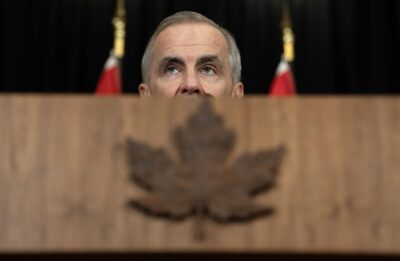
OTTAWA — Canada’s position on the war in Iran has been from the outset one of supporting the United States acting to prevent Iran from obtaining a nuclear weapon.
But in recent days, Prime Minister Mark Carney has called on all sides to respect international law and has said the military action in Iran appeared to be “inconsistent with international law.”
Here’s what the prime minister has said publicly over the past week.
Feb. 28, Canada-India forum in Mumbai:
From Carney’s opening remarks:
“Canada’s position on the developments in the Middle East remains clear. The Islamic Republic of Iran is the principal source of instability and terror throughout the Middle East. It has one of the world’s worst human rights records and must never be allowed to obtain or develop nuclear weapons.
“Canada stands with the Iranian people in their long and courageous struggle against this oppressive regime and we reaffirm Israel’s right to defend itself. Canada supports the United States acting to prevent Iran from obtaining a nuclear weapon and to prevent its regime from further threatening international peace and security. And the Canadian government urges the protection of all civilians in this conflict going forward.”
Taking questions later from the moderator, Carney was asked if he was worried about escalation.
“Well, I mean to state the obvious, it is a serious escalation,” he said. “It comes at the end of, candidly, years — one could portray it as decades — of diplomatic efforts to resolve the situation, to end the nuclear enrichment, to end the state-sponsored terrorism of Iran.
“Those efforts have made episodic progress, but not comprehensive progress. Those efforts intensified in recent weeks, without resolution. It’s led us to this. It is a serious conflict. In a serious conflict you have to make choices. We have a consistent position: prevention of Iran obtaining nuclear weapons, prevention of the state-sponsored terrorism that has plagued the Middle East in multiple forms, and support for the Iranian people.
“The consequence of that will be determined by whether Iran de-escalates. We call on all parties to protect civilian lives as best as possible in what is a very serious situation.”
Carney was then asked what supporting the United States and Israel entails, and whether he sees Canada getting involved.
“Look, we have not been party to the military buildup to this or the military planning of this,” he said. “So it is not envisioned that we would be part of it moving forward. But certainly we have, both … the minister of (foreign affairs) with their counterpart, myself with the president, we’ve had a series of discussions over recent weeks about the possibility of this happening if the diplomatic efforts were not successful.
“It’s been very clear the threat of what has now been realized, in terms of military action, should have been clear to an Iranian regime which has refused to dismantle fully its nuclear program, and continues to pose a threat to the region.”
March 4, press conference in Australia:
From Carney’s opening remarks:
“Canada has long seen Iran as the principal source of instability and terror in the Middle East. The regime and its proxies have murdered hundreds, including Canadian civilians, and caused untold suffering for millions of people in the Middle East and beyond.
“Canada stands with the Iranian people in their long and courageous struggle against the regime’s oppressive rule. Which is why we support efforts to prevent Iran from obtaining a nuclear weapon and to prevent its regime from further threatening international peace and security.
“Because Canada is taking the world as it is, not passively waiting for a world we wish to be. We do, however, take this position with regret because the current conflict is another example of the failure of the international order.
“Despite decades of UN Security Council resolutions, the tireless work of the International Atomic Energy Agency and the succession of sanctions and diplomatic frameworks, Iran’s nuclear threat remains. And now the United States and Israel have acted without engaging the United Nations or consulting allies, including Canada. So where to from here, with a rapidly spreading conflict and growing threats to civilian life?
“Canada reaffirms that international law binds all belligerents. We condemn the strikes carried out by Iran on civilians and civilian infrastructure across the Middle East. And we implore all parties, including the United States and Israel, to respect the rules of international engagement. Canada calls for a rapid de-escalation of hostilities and is prepared to assist in achieving this goal. Resolution of this crisis will require commitment to a broader political solution. And diplomatic engagement is essential to avoid a wider and deeper conflict.
“Innocent civilians must be protected and all parties must commit to finding enduring agreements to end both nuclear proliferation and terrorist extremism. Canada will pursue this approach with like-minded countries and participants in the conflict.”
Asked by reporters to explain his “regret,” Carney said the attack on Iran appeared to be “inconsistent with international law” and cited Iran’s decades of international law violations.
“With respect to (international law), it’s for the United States and Israel to make the case, whether or not that is the case, and it’s for others more expert than me … to make that determination,” he said.
“You know that we were not informed in advance. We were not asked to participate. Prima facie, it appears that these actions are inconsistent with international law. So we would not have been in a position earlier this week, or the weekend, I guess, to take a judgment that met our standards if we had been asked to participate. We weren’t, we haven’t made that formal judgment, it’s for others to make those judgments.
“As I said … we’re dealing with the world as it is. So in the context of what’s happened, what’s been begun, we support the efforts to end the Iranian nuclear program and its regime’s decades-long process of state sponsored terrorism. But we remind that international law binds. It binds particularly with respect to civilians, civilian infrastructure and it binds all parties, should bind all parties.
“We call for a de-escalation. We’re prepared to assist in that.”
March 4, Lowy Institute in Sydney:
Taking questions from a moderator, Carney is asked again to explain Canada’s position.
“I’d put it this way, which is that the objective of preventing Iran from obtaining nuclear bomb capacity, nuclear weaponry, we support that,” he said. “We’ve supported it for decades. And the series of efforts, including military, have not yet yielded the result that is necessary for peace and stability in the Middle East.
“The initial justification for action, at least in our conversations, was related to that. We support that. We obviously support, at the same time — maybe I should state it — preventing, or ending I should say, the export of terror through proxies and directly that Iran has been doing for decades.
“Now, the action that was taken, we weren’t consulted on it. There was not a broader process for it. It is would appear prima facie not to be consistent — or to be inconsistent — with international law. It’s a judgment for others to make. I’m not a lawyer, let alone an international legal expert.
“We take the situation as it is, including when we made that statement. We take the situation as is with the U.S., as the situation is now. With the expansion, I have to say a predictable expansion of the conflict … there is first and foremost an importance to re-emphasize the rules of international engagement.
“Iran has, yes they have targeted some military targets, but there have been extensive targeting of civilians and civilian infrastructure. And it’s only been the strength of the defences that have limited the damage — the damage could be quite horrific across the region as a consequence of this. Similarly, it is the responsibility of all belligerents to … adhere to those rules.
“We need to recognize that there are a large number of countries now that are being attacked and they are only defending. And that is admirable. It creates a possibility for a de-escalation, but certainly not a certainty, and we’re encouraging that to happen.”
This report by The Canadian Press was first published March 4, 2026.
The Canadian Press
40-39