

Poll
Do you think Alberta should align with other provinces in adopting daylight time?
- Yes (76%, 502 Votes)
- No (24%, 157 Votes)
Total Voters: 659
 Loading ...
Sponsored
Moms describe being trapped in a cycle of anguish when a loved one faces mental health crises
By Canadian Press on March 4, 2026.
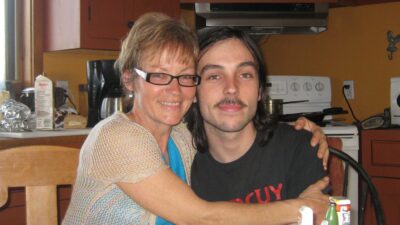
TORONTO — Nancy Saunders says her son Ben Brennan accomplished so much in his short life.
He was an exceptional musician, loved writing and was a freelance recording engineer, she said.
Brennan played in bands across Canada and toured Europe. He studied at the University of King’s College in Halifax.
Deeply kind and compassionate, “he just had a huge soft heart,” Saunders said.
“The world was so much better with him in it,” she said through tears from her home in Ketch Harbour, N.S.
In April 2023, Brennan died by suicide. He was 29 years old.
In his early 20s, Brennan started struggling with depression and anxiety. He got medication from his family doctor and did “very well” for about four years, Saunders said.
But he went off his medication and was “starting to show some symptoms of bipolar,” she said, noting that there was a family history of the disorder that causes swings between depression and mania, as well as psychosis in some cases.
But Brennan never got an official diagnosis because he never made it to a psychiatrist or mental health clinic, she said.
Despite repeatedly calling Nova Scotia’s mental health intake line, Saunders said she was told she couldn’t request treatment for her son due to privacy laws.
She called a mental health clinic, but they told her the same thing: that Brennan had to call himself.
Access to psychological help is a huge issue across the country. The latest data from the Canadian Institute for Health Information shows only half of Canadians who were referred to mental health counselling received care within 30 days of referral.
Of patients who were hospitalized, 30 per cent did not have a followup with a doctor within 30 days.
Many families find themselves lurching from crisis to crisis, often including short-term hospitalizations that end without adequate followup care in place.
Experts say this leads to patients deteriorating as a result, landing back in hospital repeatedly, with nothing to stop the vicious cycle.
The subject has become a topic of discussion in the wake of the Tumbler Ridge, B.C., mass shooting, where police revealed the 18-year-old shooter had previously been apprehended and taken to hospital for mental health issues.
People with mental illness are much more likely to be the victims of violence than the perpetrators, mental health experts emphasize, but make the point that short-term crisis responses are not enough to treat serious mental illness.
Saunders’ family tragedy highlights some of the barriers that block parents trying to get adequate help for their loved ones with serious mental illness.
Saunders begged her son to call the provincial intake line and he finally did.
“They gave him an appointment. They assessed him as low risk and gave him an appointment four months out,” she said.
Saunders called them back and pleaded with them to get him in earlier, trying to explain that Brennan’s condition was much more severe than he had expressed, but with no luck.
“I’m calling the intake line, providing information like ‘my son’s off his meds. We witnessed a psychotic episode. He has withdrawn from all of his favourite activities. He can’t finish school. He had to drop out of school,’” she said.
“They would not accept my information.”
She did convince Brennan to go back to his family doctor to get back on his medication.
For a while, that seemed to bring some relief while Brennan waited for his mental health appointment.
“He was showing signs of improvement,” Saunders said.
Saunders is convinced that if any of the services she reached out to had listened to her, her son would have received psychiatric treatment in time and would still be alive today.
“He very quickly plummeted to a place of not being able to see any other option to end his pain. This will haunt me every second until I take my last breath” she said.
“He had such a beautiful life ahead of him.”
AGONIZING CYCLE
Dr. Allison Crawford, a psychiatrist and senior scientist at the Centre for Addiction and Mental Health in Toronto, said far too often patients and their families are left on their own to figure out where to get help, even though referral to that treatment should be considered just as much a part of a patient’s care plan as their hospital admission.
“We need to not only step people up to that intensive care, we need to be able to step them down in safe ways so that they make good transitions back to their communities,” she said.
“This is a major failing of our health system.”
A mother in Fort McMurray, Alta., said her 25-year-old son is a victim of that failure. The Canadian Press has decided to keep her identity anonymous and refer to her as Lauren to protect the privacy of her son.
Lauren said her son was diagnosed with schizophrenia six years ago, but that he does not accept that diagnosis. Since then, she says he’s been trapped in a cycle of anguish.
As she recounts it: It begins with an altercation, one of which is soon to be before the courts. Police are called, and take him to a hospital. He’s admitted and medicated for about two weeks before he’s discharged. He doesn’t have a therapist or family doctor. He starts to feel better and stops taking his medication. The cycle repeats within about six months.
“Almost every day, he’s like, ‘Mom, I just want my life back. I’m done with this.’ He’s exhausted. And he’s been exhausted for years,” she said from her northeast Alberta home.
“They would say at the hospital that he needs to be seeing a proper therapist for his issues, but the problem was it would take about six months in order to get to see somebody.”
“So in that time frame of six months, his medication would stop working and then we were back to square one.”
The Fort McMurray mother said her son declined a request sent through her to be interviewed.
She describes her son as a hard worker with a gentle spirit. He previously enjoyed his work on an oilfield. Sometimes he would work 40 days in a row, he was so committed to the job, and earned “big money.” As a child, he was the kid who insisted on taking a spider outside rather than squashing it.
Until recently, he was homeless. He can’t get an appointment to see a therapist until April, she said.
“There’s nothing, nothing in place for him,” his mother said.
Her son is not alone. More than 5,000 people in Alberta were hospitalized for mental health disorders from 2024 to 2025, according to Canadian Institute for Health Information data.
In British Columbia, Northwest Territories and Nunavut, schizophrenia and delusional disorders were among the top reasons people were admitted to hospital during the same period.
PARENTS WHO WANT MORE INPUT
Kathleen Mochnacki, president of Family Alliance on Severe Mental Illnesses, said there needs to be “a continuum of care.”
“Society really needs to recognize how compromised an individual is with a psychotic illness, and we can’t just throw them in hospital, expect them to be well when they come out,” she said.
The national alliance – called FASMI – is lobbying to increase the ability of parents to have a say in their adult children’s care, including providing information to mental health care staff to paint a full picture of the patient’s symptoms. They also want the ability to sign off on involuntary hospitalization.
They argue the goal is not to violate the patient’s privacy or autonomy, but to be “partners in the treatment and care of their loved ones”
FASMI says the same self-decision-making standards shouldn’t apply for people with severe mental illnesses because one of the symptoms can be anosognosia – a medically recognized phenomenon in schizophrenia, dementia and other conditions when patients lose insight into the seriousness of their own illness.
A Toronto mother says her 31-year-old son is caught in a cycle of hospitalization after psychotic or manic episodes, followed by a petition to get himself discharged after a few days — even when his health-care team says he’s not ready.
The Canadian Press is also keeping her identity anonymous to protect the privacy of her son, and is calling her Nikkita.
A member of FASMI living in Toronto, Nikkita said her son’s life was turned upside down after a bicycle accident about 10 years ago. He had a traumatic brain injury and was later diagnosed with bipolar and schizoaffective disorder, characterized by delusions, hallucinations, mania and depression. During one episode, he thought he was on fire, she said.
“When he’s on medication, he gets stabilized, he’s good to go,” his mother said.
But he’ll often stop taking medication because of unwelcome side effects, including sedation, she said.
“My son has a very high work ethic. So when he starts feeling sedated, he doesn’t like it,” Nikkita said.
“They haven’t found a medication where he’s not feeling that sedated as yet.”
She said if it weren’t for the co-op they live in, her son would be homeless.
Family members and friends there have known him since he was a kid and see him as a “peaceful, helpful person” who volunteered his time on the co-op board, is an athlete and has a great sense of humour.
But when he has a psychotic or manic episode, his mother says it’s frightening, especially for newer neighbours.
“If you have someone in an apartment building who’s broken walls, who has, you know, gone screaming up and down the hallway, most people are not going to be putting up with that,” she said.
When he gets depressed, it’s heartbreaking, she said, and she fears he will harm himself.
“I’ve heard ‘I want to jump in front of a train.’ I’ve heard ‘I wanted to jump off the balcony. I wish I was hit by a bus.'”
“(He says) ‘I just don’t want to be here anymore.'”
She’s frustrated that her son can repeatedly convince a provincial capacity and consent board that he should be discharged.
“The challenge, especially when they’re manic or (have) psychosis or anything like that, is that the hospital has seen them presenting one way and depending on the person, they could probably have what sounds like normal conversation, but it’s not normal conversation,” Nikkita said.
“Especially if you don’t know them, you won’t know when they’re not telling the truth.”
She’s also frustrated that the hospital hasn’t been able to discharge him to an outpatient psychiatrist with whom he can build a trusting relationship. Instead, he’s been referred to an assertive community treatment (ACT) team that checks in with home visits.
She said the ACT team hasn’t been able to meet her son’s needs.
“It baffles me, this Russian roulette that we’re playing with people… We’re seeing a lot of unwell people on subways and on trains and streetcars. And people say they don’t want help, and I’m like, that’s not true.”
The Canadian Press did not speak with her son because as of Tuesday, Nikkita said he was in hospital and unwell.
Nikkita said he had once again been discharged while still ill and she had to call police to get him taken back to hospital when he had another crisis.
Dr. Louise Gallagher, chief of the Child, Youth and Family Services division at CAMH who was speaking generally and not about this particular case, said she’s always encountered families who want to be more involved in care.
But it’s a tricky balance of knowing a patient may not fully understand why they should stay in hospital, and the law, which protects “autonomy and people’s rights,” she said.
“Once the risk is reduced, we can’t actually keep them in hospital always against their will. And in a way the illness itself can kind of drive that refusal of treatments.”
NOT GIVING UP
The Fort McMurray mom, who recently moved into a cheaper apartment in order to financially support her son, has tried taking legal action to disrupt his cycle of mental illness crises.
She convinced a judge several years ago to issue a court order to apprehend her son to get him reassessed. She also obtained a court order that mandated he take his medication.
Both worked for a time, she said, until they were eventually dropped.
“My responsibility is to fight with the courts and fight with doctors to get him the help that he properly needs and I will continue to do that,” she said.
“I don’t give up on my kid.”
If you or someone you know is thinking about suicide, support is available 24/7 by calling or texting 988, Canada’s national suicide prevention helpline.
This report by The Canadian Press was first published March 4, 2026.
Canadian Press health coverage receives support through a partnership with the Canadian Medical Association. CP is solely responsible for this content.
Nicole Ireland and Hannah Alberga, The Canadian Press
89-88