


Why Canada is helping Canadians flee the Middle East — and what it costs
By Canadian Press on March 14, 2026.
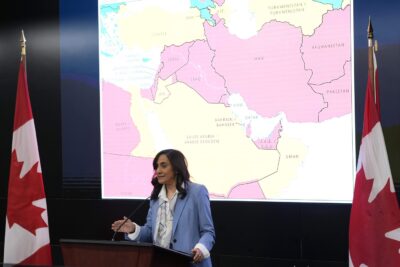
OTTAWA — Ever since the U.S. launched its war against Iran on Feb. 28, Foreign Affairs Minister Anita Anand has said her top priority is helping Canadians who want to leave the Middle East.
As of Friday, nearly 8,500 Canadians and permanent residents have made it home to Canada from the region, while more than a thousand have left the Middle East for safe third countries, her department says.
Here’s a look at how and why Ottawa helps people leave dangerous places, and what it costs.
Why does Canada help people evacuate?
Ottawa has argued that it has no legal duty to remove Canadians from crisis zones. Instead, it’s a service Canada offers — one that Canadian politicians often feature prominently in their social media posts.
Global Affairs Canada runs an emergency response centre to help Canadians coping with everything from lost passports to imprisonment abroad. That centre gets a staffing boost at times of crisis to help embassies co-ordinate information on commercial flights. The federal government sometimes charters planes or tasks the military with helping citizens evacuate.
Canada often works with like-minded nations to share evacuation resources. Canadians leaving Sudan might board a French military aircraft, for example, while Australians looking to leave Dubai might end up boarding a flight to Istanbul chartered by Ottawa.
Global Affairs Canada also issues travel advisories that urge Canadians not to visit certain parts of the world due to safety concerns. Ottawa has for months advised against all travel to Iran. For years, it has either recommended no travel at all to places like Israel and Lebanon or it has told Canadians they should restrict themselves to essential travel.
How does it work?
With a lot of video calls. Sébastien Beaulieu, GAC’s director for international emergencies and travel advice, told senators Thursday that Global Affairs Canada has staff join daily co-ordination calls with counterparts from the Five Eyes intelligence alliance during major crises.
“We exchange information not only on what is happening and the evolution of the conflict, but also in terms of the pressures on the ground and what each of us are doing,” he said, adding that Canada also has agreements on evacuations with France, the European Union and Japan.
Federal officials pass along the latest verified information from crisis zones in both English and French to those who register with Global Affairs Canada.
Beaulieu said diplomats always first seek out commercial airlines when arranging for evacuations. He said commercial airlines are the most cost-effective option and are in the best position to bring evacuees directly to Canada, instead of forcing them to travel to a third country.
The government will often engage in “block-booking” by paying to temporarily hold airline seats for citizens to reserve and pay for themselves, sometimes using provided codes. Ottawa can also charter flights or buses when those routes are safe and commercial options are sold out.
Beaulieu said the military could theoretically help to evacuate Canadians “but we are not there in the Middle East at this stage.” Military helicopters and aircraft have helped get Canadians out of places like Haiti and Sudan in the past.
While Canada relies on diplomats it deems essential to help Canadians abroad make it to safety, Beaulieu said the initial decision to send home non-essential staff and relatives from Tel Aviv has since been expanded to Ramallah, Beirut and Baghdad.
In Cuba, where a U.S. oil blockade has worsened a humanitarian crisis, diplomatic staff could be called on to help with an evacuation if one is needed. Beaulieu said the embassy in Havana is coping with the fuel shortages by using solar panels when possible and limiting its services to shorter hours — things he said Cuban government departments are also doing.
Why is demand dropping?
The world was shocked by images of Iranian drones hitting civilian areas in Abu Dhabi and Doha that are popular with travellers. Some Canadians in those cities have since found their own ways out, while other have taken to sheltering in place or downloading apps that warn of incoming strikes.
Beaulieu said that in the days after the U.S. launched its war on Iran, GAC staffed “over three shifts of 50 people per day, answering calls of Canadians from the region.”
The department has since drastically decreased that staffing level because the number of daily inquiries has dropped from a peak of 1,400 in the first days of the war to 400, he said Thursday.
Beaulieu said these calls aren’t coming exclusively from Canadians abroad. “In many cases,” he said, their relatives call for help with finding travel options or renewing a passport.
Meanwhile, Kuwait’s government has been preventing foreigners, including Canadians, from leaving without a permit that requires them to consult with their employer.
Anand said Thursday she has raised that issue with her Kuwaiti counterpart, who she said agreed “to expedite the ability of Canadians to leave.” Ottawa is compiling a list of citizens facing this problem.
On Friday, Anand noted on social media there are “delays affecting delivery of passports in certain parts of the region due to airspace closures. The gradual resumption of air travel will help address this issue.”
Why are some Canadians staying put?
Many Canadians live full-time in places like Dubai where they have high-paying jobs, or in Beirut where they might have deep family ties. Many Canadians in Iran have described family commitments, such as caring for ailing relatives, that prevent them from leaving.
Many Canadians in Lebanon have survived multiple conflicts and crises there and seem reluctant to leave.
On March 7, Global Affairs Canada reported that just three per cent of the 24,045 Canadians registered in Lebanon had sought help to leave the country. Fourteen per cent of the 30,421 Canadians registered in the United Arab Emirates have sought help.
Documents obtained by The Canadian Press through the Access to Information Act show interest in Ottawa’s effort to help citizens and permanent residents leave Lebanon during the Israeli invasion in 2024 dropped off dramatically within days of that campaign starting.
Canada spent $11 million to keep charter planes on standby for three months starting in August 2024, and about $4 million to fly 844 Canadian citizens, permanent residents and their family members from Lebanon to Istanbul in October of that year.
While the federal government managed to put 300 foreign nationals on those flights alongside Canadians, hundreds of seats were left empty.
The 2006 military-assisted evacuation of Lebanon was also controversial. Taxpayers spent $94 million to airlift 15,000 Canadians, some of whom were deemed “Canadians of convenience” by then-MP Garth Turner, who argued many had tangential links to Canada.
How much does this cost?
A lot. Evacuations work on a partial cost-recovery basis. Ottawa charges Canadians for flights and bus trips to various destinations — often at prices that reflect what a commercial option would cost if it was available.
Beaulieu said this approach was taken for a flight Ottawa chartered from Dubai to Istanbul.
“We established what was the cost of a flight on Expedia in normal circumstances, and that’s what we decided to charge Canadians,” he said.
That leaves Ottawa covering added fees for chartered flights and the staff time needed to co-ordinate logistics and communications.
While we won’t know the cost of the current operations for months, we can look to recent examples.
GAC paid nearly $10 million for its consular response in Haiti in 2024, which helped 681 Canadians leave that country.
In 2024, GAC allocated $40 million upfront for evacuations in the Middle East as the Israel-Hamas war expanded to include Lebanon.
Anand said Thursday that the cost-recovery model is meant to show fiscal prudence, but the overarching goal is to protect Canadians.
“It is necessary at all times to ensure that we are providing the secure options for egress for Canadians, which is why we ensured that we had multiple options,” she said.
Is this sustainable?
Not really. Last May, as Anand took on her new department, Global Affairs Canada stressed in its briefing binder that deteriorating stability worldwide is causing a massive expansion in the work required to protect Canadians abroad.
The binder said Canadians might need to pay more and expect less, now that major crises are erupting every few months and as Ottawa seeks to help not just citizens but permanent residents and relatives.
The department said the consular fee charged for passport renewals — meant to help cover the cost of all sorts of supports abroad — hasn’t been increased since 2013.
Global Affairs Canada is facing budget cuts which will lead to layoffs and a scramble to find efficiencies. Last November’s budget said GAC would be “revamping emergency preparedness and modernizing consular services” to cut costs.
Anand said last November that she is “confident that these reductions will have no impact on the services on which Canadians rely while abroad.”
Beaulieu testified the department has upgraded its technology and now has new ways to compile information from 12 different diplomatic posts in the region.
Canadians signing up for charter flights can pay upfront through an online portal or have relatives do so. Those who can’t afford a flight can still sign an undertaking to pay Ottawa back — but upfront payment is a recent phenomenon, Beaulieu testified.
He said the uptick in geopolitical crises is honing Ottawa’s skills.
“Through such efficiencies and improving our ways of working — and frankly, with the habit of doing this as well, and developing our culture of crisis across the department — we will continue to be able to respond to Canadians despite the fiscal pressures,” he said.
This report by The Canadian Press was first published March 14, 2026.
Dylan Robertson, The Canadian Press
58-57