

Poll
Do you still take part in Easter traditions like egg hunts or baskets?
- No (68%, 243 Votes)
- Yes (33%, 117 Votes)
Total Voters: 360
 Loading ...
Sponsored
No difference between suspending and amending DRIPA, says First Nations leader
By Canadian Press on April 6, 2026.
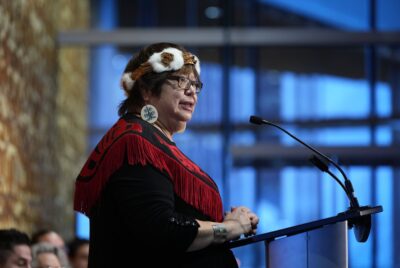
VICTORIA — A First Nations leader in B.C. says Premier David Eby’s plan to suspend the Declaration on the Rights of Indigenous Peoples Act will create less certainty, especially because the NDP may not be in government three years from now.
Judith Sayers, president of the Nuu-chah-nulth Tribal Council, says the climate for reconciliation during the proposed three-year suspension may have changed, and it is not clear if the courts will have ruled on two decisions being appealed.
The so-called DRIPA legislation is at the centre of legal trouble for Eby’s government after it was cited by First Nations in two landmark court cases that raised questions of land rights and B.C.’s mineral rights.
Sayers says suspending the legislation passed unanimously in 2019 would have the same effect as amending it, and she and other leaders are still forming their response to Eby’s plan.
The premier has framed his proposal as an alternative to permanently amending DRIPA to give the Supreme Court of Canada time to resolve the mineral rights case, the first case expected to make it to the high court.
In a leaked transcript obtained by The Canadian Press of a meeting between Eby and First Nations leaders, Eby said the mineral rights case forces government to insert the UN declaration across all its laws but government lacks staff and political capital to do that.
Sayers says she believes that suspending sections of DRIPA would create more, not less certainty, by inviting further legal actions from First Nations.
She says First Nations leaders are still reviewing their options, but she notes that Eby would be violating the UN declaration if he goes ahead with his plans because it needs collaboration leading to free and prior consent.
Suspending parts of the act would require legislation, and the transcript of the meeting says the government plans to table that legislation next week.
Sayers says suspending DRIPA “tarnishes the images of British Columbia in the international community, because (B.C. legislators) were the ones, who did this first” and they “were so proud of that.”
This report by The Canadian Press was first published April 6. 2026.
Wolfgang Depner, The Canadian Press
15-14