


Oakland police won’t release body camera video of ex-NFL player Doug Martin’s in-custody death
By Canadian Press on December 3, 2025.
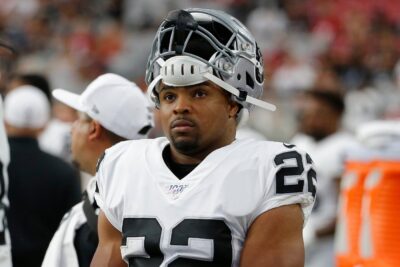
The Oakland Police Department has declined to provide the public with access to police body camera videos that would show what happened on Oct. 18, the morning former Oakland Raiders running back Doug Martin died while in the custody of several OPD officers.
In response to a public records request by The Oaklandside, the department argued Tuesday that Martin’s death did not happen during a “critical incident,” and is therefore not subject to state laws governing the release of police body camera footage.
The decision was made by Acting Police Chief James Beere. Beere determined that, under the state Public Records Act’s public-interest balancing test exemption, and because the Community Police Review Agency, or CPRA, is investigating the incident, the video and audio recordings may be kept secret. According to the balancing test exemption, agencies may keep records secret if the public interest in doing so outweighs the public interest in disclosing them.
“Specifically, disclosure at this time would compromise privacy interests, and interfere with an ongoing investigation,” OPD wrote in response to our request.
According to Martin’s family, the ex-NFL player struggled with mental health issues, and his parents had called authorities that night seeking help. “Feeling overwhelmed and disoriented, Doug fled his home during the night and entered a neighbor’s residence two doors down, where he was taken into custody by police,” the family said in a statement sent to The Oaklandside.
Police showed up at a home on the 11000 block of Ettrick Street in the East Oakland hills early in the morning.
According to OPD, following a “brief struggle” with officers who were attempting to detain him, Martin suffered a “medical emergency” and became unresponsive.
Paramedics arrived, rendered medical aid, and drove Martin to a nearby hospital, where police say he died. He was 36. The cause of death has not been released.
The officers involved in the incident have been placed on paid administrative leave. OPD’s Homicide Unit and Internal Affairs Bureau, the Alameda County District Attorney’s Office, and the Community Police Review Agency, or CPRA, are investigating the incident.
In-custody deaths and police shootings were normally shrouded in secrecy, but a 2018 state law was enacted to provide greater transparency. Assembly Bill 748 amended state law so that the police can withhold video or audio recording from a “critical incident” only for up to 45 days. Police can only withhold the video for longer if releasing it would “substantially interfere” with an investigation. In making its decision to withhold the Oct. 18 videos, OPD did not explain how releasing them would interfere with the investigations underway.
A “critical incident” under the law is one in which a police officer fired a gun at someone, or an officer’s use of force resulted in a person’s death or injury. The police are not required to release videos of other types of incidents.
In cases where making the recording public would violate a person’s privacy, the law also allows agencies to withhold the recording or redact portions of it to protect the person’s privacy. In instances where the subject of the recording is dead, agencies are required to “promptly disclose” the video or audio to the person’s immediate family or lawyer.
AB 748 was passed to increase transparency and trust in the police, and ensure that police uses of force are properly investigated.
Martin’s family did not respond to questions from The Oaklandside about whether or not they’ve had a chance to review the recordings. In an Oct. 20 statement, they requested privacy.
The Oaklandside called and emailed OPD and the City Attorney’s Office to ask about whether Martin’s family has been allowed to review the recordings. We have yet to hear back.
Martin played for Boise State and was drafted into the NFL by the Buccaneers. He made two Pro Bowl appearances and briefly played for the Raiders. His death made national news as family, friends, and fans mourned the loss.
___
This story was originally published by The Oaklandside and distributed through a partnership with The Associated Press.
Roselyn Romero/the Oaklandside, The Associated Press
-21