


2028 Olympics could bring big wins for Los Angeles labor unions
By Canadian Press on January 22, 2026.
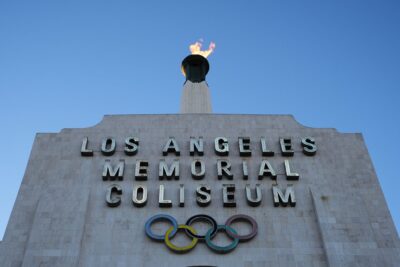
LOS ANGELES (AP) — As Los Angeles ramps up for the 2028 Olympics, local unions are drawing inspiration from the Paris Games when hotel workers went on strike a day before opening ceremonies.
The French workers waved signs at the five-star hotel where members of the International Olympic Committee were staying, threatening “No Olympics!” if their demands were not met. A slew of labor union strikes surrounding those Games netted gains from higher salaries to better retirement benefits.
Los Angeles labor leaders representing tens of thousands of workers across Southern California hope to employ similar strategies as the city prepares to host the Summer Games in 2028.
Unite Here Local 11 co-President Kurt Petersen said his union has aligned more than 100 contracts that cover roughly 25,000 workers at hotels, airports, sports arenas and convention centers to expire in January 2028, mere months before the opening ceremony. The idea is to maximize bargaining power.
United Food and Commercial Workers Local 770, which represents workers in the health care, grocery and packing industries; and Service Employees International Union Local 721, which represents more than 100,000 county employees, also plan to leverage contracts that expire in the first half of 2028.
“We are going to have a force … of working people to do whatever it takes, including striking if we have to during the Olympics in 2028,” Petersen said. “The Olympics can’t happen without the workers.”
A coalition of labor groups, community organizations and religious institutions are pushing for the Los Angeles Olympics organizing committee — known as LA28 — and the city to pay for building 50,000 housing units, pass a moratorium on short-term rentals like Airbnb, and protect immigrant workers.
Jules Boykoff, a professor at Pacific University who has studied worker gains from past Olympics, called the Games a “once-in-a-generation opportunity” for organized labor.
“These sports mega events are yet another social moment that helps us see with greater clarity, people who’ve been there working all along, who actually are essential workers,” Boykoff said.
He pointed to wins by transportation workers and garbage collectors ahead of the Paris Games as examples.
Who benefits from the Olympics
Most of the economic benefits tied to the Olympics are short-lived, according to Robert Baumann, a professor at College of the Holy Cross who has examined data from several Games.
Tourism and hospitality industries see a boost during the time period, while all other industries tend to suffer due to the general disruption to the host cities, Baumann said.
But the Olympics still represent a powerful bargaining chip for workers.
Axel Persson, general secretary of the CGT Rail Workers Union in France, said on the Real News Network podcast that his organization won several concessions ahead of the 2024 Paris Olympics, such as an earlier retirement with full pension and doubled pay for transportation workers during the Games.
In Rio de Janeiro, more than 2,000 workers went on strike at venue construction sites two years ahead of 2016 Summer Olympics over benefits and working conditions. They parlayed the walkout into higher pay and an increase in workers’ lunch vouchers.
City approves $30 per hour minimum wage for hospitality workers
In Los Angeles, labor groups have been vocal about the Olympics benefitting workers critical to the Games’ success.
The city recently approved a minimum wage of $30 per hour by July 2028 for workers at hotels with 60 or more rooms, an increase that’s set to be phased in over the next few years. The employees’ current minimum wage is $22.50.
Business groups have said the increase will be a blow to the city’s tourism industry, which never quite recovered from the COVID-19 pandemic. Opponents are still trying to delay the wage hike until after the Summer Games.
On the other side, local unions are collecting signatures for several proposed ballot measures, including one that would penalize corporations with CEOs who earn more than 100 times the company’s median employee. Another proposal would require the public to vote on developing major event and hotel projects, and a third would expand the $30 minimum wage to all workers.
“We need to make the Olympics and the CEOs who are gonna make money off the Olympics pay for things that our city and citizens need,” Petersen said.
Business groups push back
Los Angeles-area chambers of commerce are also using the fight over the Olympics to target a source of long-standing frustration in the business community — the gross receipts tax. Business leaders proposed a ballot measure to repeal the tax shortly after city council passed the hospitality worker minimum wage.
The tax is levied on businesses’ total revenue before operating costs and accounts for more than $700 million in annual tax revenue, according to the city clerk’s office.
The money makes up a key part of LA’s general fund, which pays for police, firefighters, homeless assistance and other core services.
“Businesses continue to get hammered in this city,” said Stuart Waldman, president of the Valley Industry and Commerce Association, one of the groups gathering signatures to repeal the tax.
On the workers’ side of the ledger, employees like Thelma Cortez, a cook for the airline catering company Flying Food Group, say they are getting hammered by the cost of living. All of Cortez’s primary paycheck now goes toward rent for her and her three daughters. She works overtime or side jobs to make ends meet.
She was excited when she heard LA would be hosting the 2028 Olympics.
“I thought that, ‘Well there will be more work, and maybe all airport and hotel workers can earn a little more,’” she said.
Jaimie Ding, The Associated Press
-33