


Canada’s Winter Games results draw attention to sport commission report
By Canadian Press on March 25, 2026.
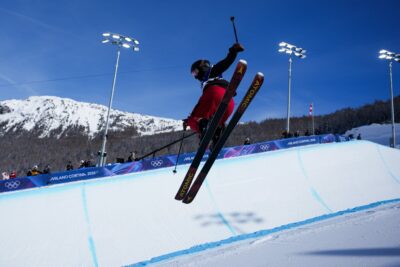
How athletes competing on the world stage are funded was just one piece of an omnibus report on the state of Canadian sport, but a key one given the country’s performance at the recent Winter Games.
Of the 98 calls to action in the Future of Sport in Canada Commission’s final report issued Tuesday, increased core funding for national sport organizations was an urgent one.
“The sport system is facing a funding crisis, which contributes to the safe sport crisis,” said Lise Maisonneuve, a former chief justice of the Ontario court of justice, who headed the commission.
“We need to increase the investment in sport to match our expectations of what the sport system ought to be. We therefore call on the Government of Canada to urgently increase core funding to national sport organizations and to regularly review and adjust funding levels.
“Our national-level athletes continue to face significant financial pressures. Athletes struggle to meet basic living expenses while balancing their competition and training demands.”
The Canadian Olympic and Paralympic committees have asked on behalf of national sport organizations in two successive federal budgets for an increase in core funding, which they say has been stagnant since 2005 and hasn’t kept up with inflation.
The most recent ask was for a $144-million increase in core funding, which is annual money NSOs count on to fund operations, athletes, coaches and support staff.
Canada had a banner 2024 Summer Games in Paris. Nine gold medals and 27 medals in total were both records for a non-boycotted Summer Olympics. Ten Paralympic gold and 29 medals beat the 2021 totals in Tokyo by a large margin.
But there was a precipitous drop in the Milano Cortina Winter Games. Canada fell out of the top five countries in total medals for the first time since 1994 with 21 Olympic medals, including five gold.
Both gold and total medals fell for Canada’s Paralympic team from 10 and 25 in Beijing in 2022 to three and 15 in Italy.
That’s without Russia, a winter sport powerhouse, competing in Italy because of sanctions from its invasion of Ukraine.
Norway dominated the Olympic Games with 41 medals, including 18 gold. China topped the Paralympic table with 44 gold, including 15 gold.
Momentum from the 2010 Winter Games in Vancouver and Whistler, B.C., where the host team won 14 Olympic and 10 Paralympic gold medals, has faded.
Moguls skier Philippe Marquis entered high-performance sport just before 2010 and was an Olympian by 2014.
He now coaches Next Gen moguls skiers and says the difference between the treatment of athletes he coaches now and how he was nurtured is “shocking.”
“It is very different and I was lucky in the sense that I kind of started high-performance sport just before Vancouver 2010,” Marquis said. “There was this wave of momentum around Vancouver and hosting Games and the funding injected in sport at that time.
“Post-2010 we kind of rode that tailwind for a couple quads. Right now … we’re just running out of breath from that kind of 2010 momentum.”
Canada’s performance at the Winter Games earlier this year “is maybe the first domino to fall,” Marquis said.
Athletes now pay out of pocket for training camps, therapists, sports psychologists and nutritionists, which were costs Marquis didn’t face.
“Athletes quit prematurely the sport system,” said the 36-year-old from Quebec City.
“Athletes don’t necessarily have the financial resources to keep going and they find themselves at a crossroads where it’s not the talent that is the limiting factor, but it’s more ‘can I still pay my bills? Do I need to go back to school? It’s probably time to go find work.'”
Prime Minister Mark Carney indicated more money may be forthcoming in comments he made March 14 to Canadian athletes competing in ski events in Norway.
“One of our take-aways is we need to revamp … our athlete funding,” Carney said in a video posted on CPAC’s YouTube channel. “We’re going to do it very deliberately over the next six months.
“Playground to podium. We’ll do it right. We’re going to be more like Norway in that regard.”
When asked about the funding demand in the commission’s report, Secretary of Sport Adam van Koeverden replied Tuesday in Ottawa that “as the Prime Minister said in Holmenkollen and Oslo the other day, our government is focused on revamping the Canadian sport system from playground to podium.
“We want to ensure that that increases funding at all levels of government. I strongly believe that sport isn’t exclusively a federal jurisdiction,” he said.
“One of the main reasons I put my name on a ballot eight years ago was to ensure that we continue to use sport as a strong-nation building activity which certainly requires more funding at the federal level, provincial territorial level, as well at the municipal levels right across our country.”
Canadian Olympic Committee chief executive officer David Shoemaker felt encouraged by Carney’s comments in Norway.
“I interpreted it to mean that we are going to be absolutely excellent on the world stage and support our Canadian athletes the way they deserve to be supported in the way that Norway does its athletes, but that we are also going to make sure that the investments are in place that we can broaden the number of participants in organized sport throughout the country,” he said. “That’s what Norway does so well.”
His Canadian Paralympic Committee counterpart, Karen O’Neill, believes the convergence of the Winter Games, the commission’s report and Carney’s comments point to significant change.
“We’re really hoping that the table’s been laid to make some announcements and follow up and reaffirm some substantive investment that will certainly transform the leadership, the investment, and quite honestly, the horizon for sport in Canada, because it is time,” O’Neill said.
“It is so long overdue.”
This report by The Canadian Press was first published March 25, 2026.
Donna Spencer, The Canadian Press
37-36